Construction vibrations in urban environments
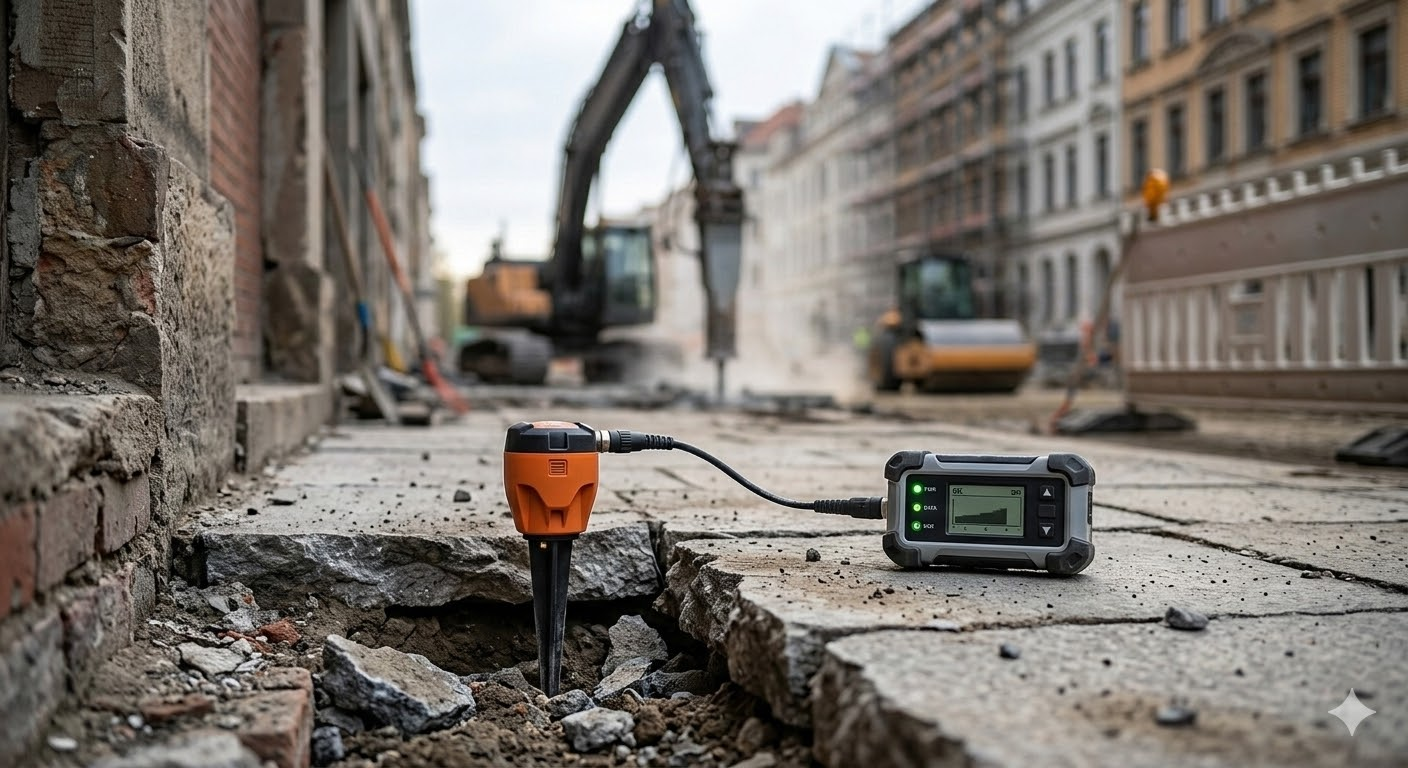
ALBERTO CALLERIO
When a construction site is established in an urban area, the effects extend beyond the visible changes to the landscape or temporary disruption to local life. Construction operations generate vibrations that travel through the ground and can reach nearby buildings, infrastructure and heritage structures, with potentially significant consequences for their integrity and for the comfort of residents. Managing this risk is a core technical responsibility: it gives contractors, designers and public clients the means to assess exposure before work begins, predict likely effects and put appropriate mitigation measures in place, while maintaining safety and compliance with technical regulations.
In dense urban environments, where sensitive buildings and infrastructure are frequently present in the vicinity of works, a preventive vibration assessment is an essential part of construction planning.
NET Engineering’s specialists have applied this methodology across a wide range of infrastructure and industrial projects over more than 25 years.
The first step in any vibration impact study is identifying the sensitive or critical receptors in the area surrounding the planned operations.
These include residential and school buildings, where occupant comfort is the primary concern; hospitals, healthcare facilities and buildings housing sensitive equipment; architecturally or historically protected structures, which are more vulnerable to repeated vibration; and linear infrastructure such as pipelines, utilities and roads.
The distance from the works, building type and intended use are the key parameters for determining how critical each receptor is.
Not all construction activities generate the same vibration levels. The operations that transfer the most energy into the ground are:
- high-power hydraulic breaker demolition,
- vibratory compaction,
- deep rotary bored piling,
- excavation in medium-density soils using high-output plant,
- blasting
Other site activities, while not entirely vibration-free, typically produce levels too low to cause concern.
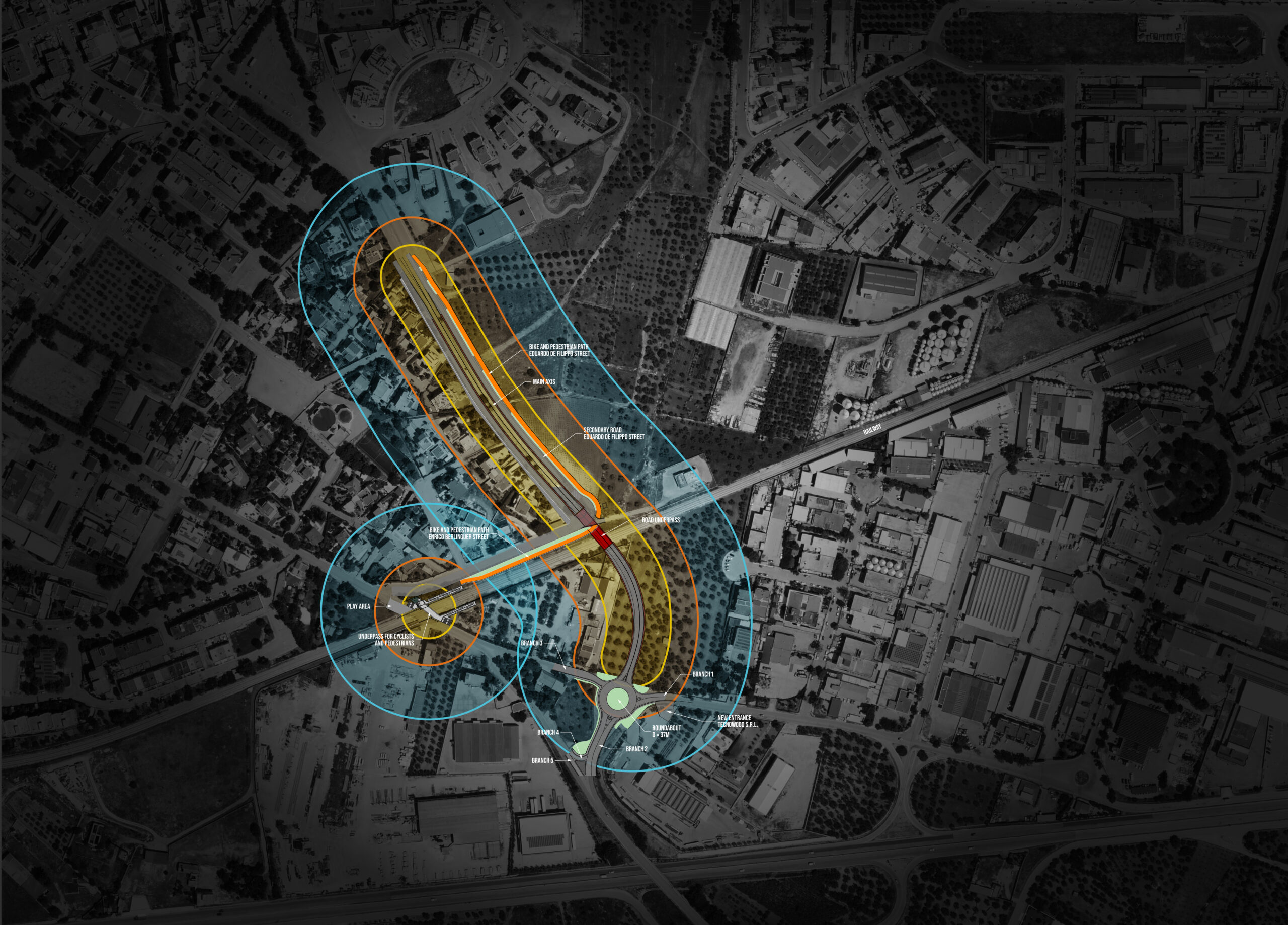
Source characterisation relies on vibration measurements taken close to the works — either on the project site itself or at comparable sites — or on published reference values derived from similar machinery. Where the specific operation allows it, a pre-construction field trial can be carried out to study the source emission directly and observe how vibration levels attenuate with distance. Sheet pile driving, for example, is well suited to this approach.
One of the most technically demanding aspects of the study is defining construction scenarios, i.e. configurations that represent the realistic simultaneous operation of multiple plant items. When several machines are working at the same time, the combined vibration level can be substantially higher than that of any individual source. Scenarios are built conservatively, taking into account:
- the position of each machine within the site,
- the number of units operating simultaneously,
- the sequence and duration of activities,
- the phases most likely to generate high vibration — such as demolition, piling and compaction.

The effects of ground vibration fall into two broad categories: disturbance to people — affecting sleep, rest and working conditions — and potential damage to buildings, infrastructure and monuments.
Once vibration levels at each receiver have been calculated, they are compared against the threshold values set out in the applicable technical standards, including UNI 9614 and UNI 9916.
This comparison identifies any cases where limits may be exceeded and informs decisions on mitigation: adjusting the site layout, limiting the number of machines operating simultaneously, or restricting certain activities to particular time windows.

The study concludes with the preparation of a monitoring plan. Construction-phase support is also available, covering on-site measurement interpretation alongside the Contractor and Works Director. This requires integrated technical expertise: knowledge of the regulatory framework, an understanding of how soils and structures behave dynamically,
These outputs allow designers and stakeholder to fully understand the extent of the impact and make well-informed decisions throughout the project, particularly in urban settings where the consequences of inadequate assessment can be most severe. and the ability to present results in a form that is directly useful as vibration maps, level contour plots, trend analysis.