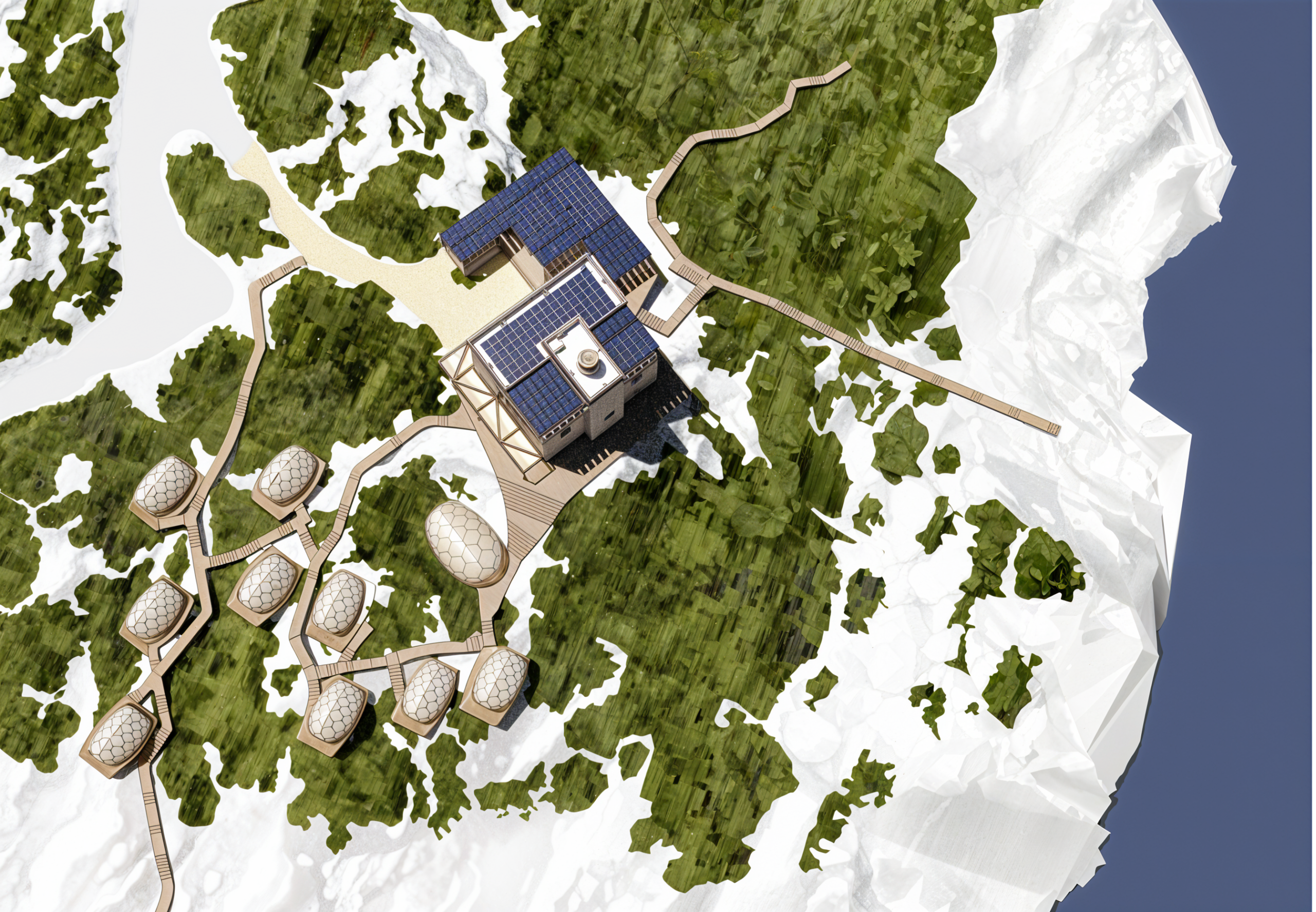
Capo Comino Lighthouse, Sardinia

Regenerating the Lighthouse as a Territorial Living Lab
Design competition—promoted by the Sardinia Regional Office of the State Property Agency—for the redevelopment of the Capo Comino Lighthouse (Siniscola, NU) and service quarters.
The project proposes the regeneration and adaptive reuse of the Lighthouse complex as a new integrated hub dedicated to sustainability, territorial enhancement, and social innovation. The intervention goes beyond the traditional concept of building restoration, interpreting the site as a permanent “Living Lab” capable of activating cultural, educational, and tourism-related processes through an open, inclusive, and adaptable model.
The design strategy is based on strengthening the relationship between landscape, built heritage, and the local community, transforming the Lighthouse into a new territorial destination accessible throughout the year. The proposal integrates cultural, educational, and recreational activities with spaces dedicated to hospitality and well-being, creating new opportunities for local development while addressing issues of seasonality and territorial marginalization.
Particular attention is given to universal accessibility and the quality of the user experience. The project includes the removal of architectural barriers and the implementation of inclusive pathways and services to ensure full accessibility for users with different needs. Public spaces and collective functions host cultural activities, events, educational programs, and initiatives aimed at different age groups, promoting an open and participatory social environment.
The proposal also encourages the development of a strong territorial network through the involvement of local stakeholders, institutions, associations, universities, and organizations connected to sustainable tourism.
The objective is to build a collaborative system capable of enhancing the cultural, productive, and environmental resources of the territory while generating positive economic and social impacts.
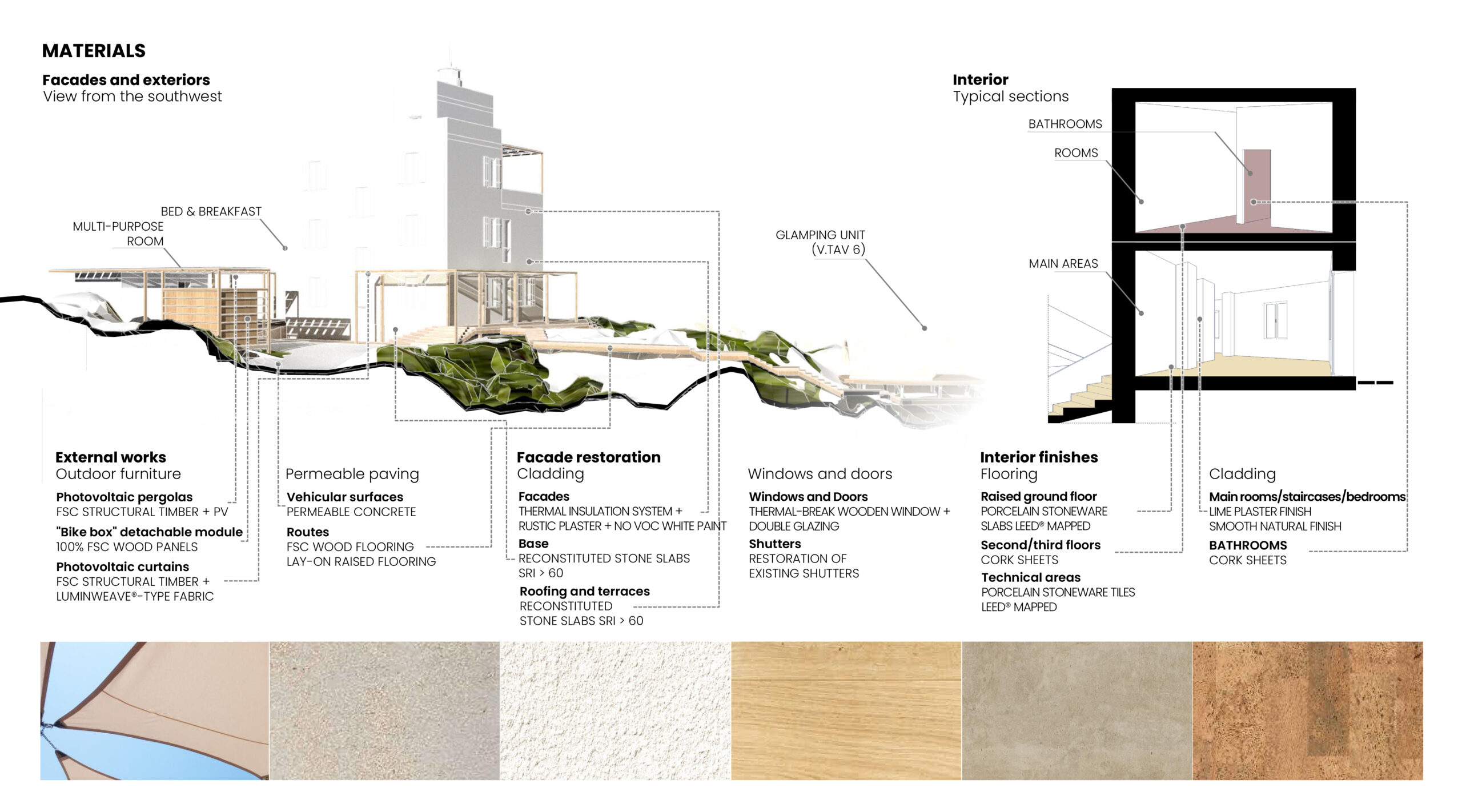
Environmental sustainability represents one of the core principles of the project. The intervention adopts strategies aimed at reducing energy consumption and achieving carbon neutrality through the use of renewable energy sources, photovoltaic systems, rainwater recovery, and passive design solutions. The use of sustainable materials, intelligent monitoring systems, and low-impact construction methods contributes to improving the overall environmental performance and efficiency of the complex.
Finally, the project promotes a sustainable mobility strategy focused on slow and low-impact travel, enhancing existing pedestrian and cycling routes, bicycle-related facilities, and environmentally conscious access systems. The integration of landscape, sustainability, and collective activities allows the Lighthouse to become a new territorial infrastructure capable of generating long-term cultural, environmental, and social value.