Social Residential Housing Bertalia Lazzaretto

An Advanced Model of Sustainable, Resilient, and Inclusive Urban Settlement
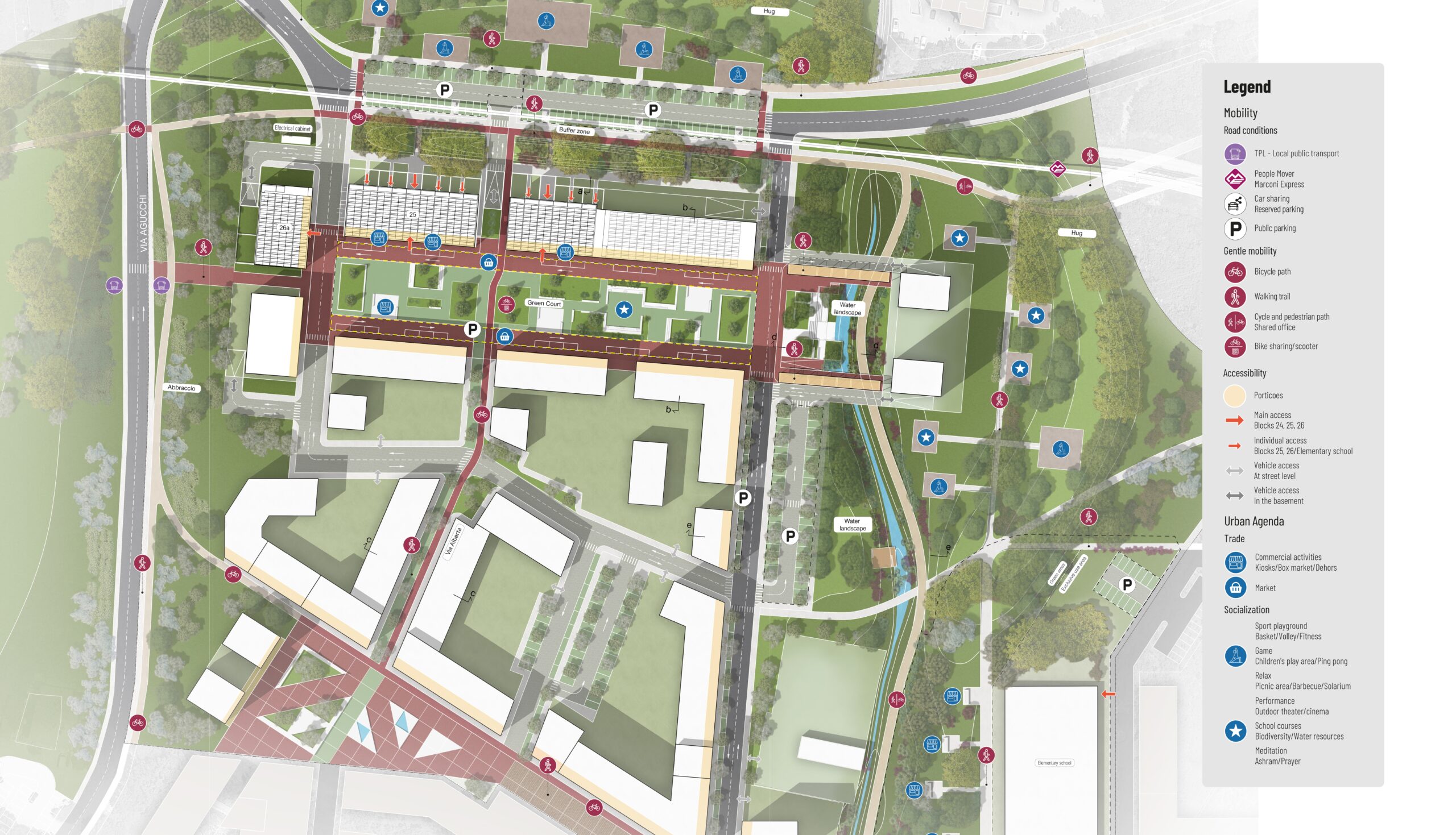
The ERS Bertalia–Lazzaretto project is conceived as an advanced model of sustainable, resilient, and inclusive urban settlement, aiming to create a neighborhood that is not merely a collection of buildings but a true urban ecosystem, where quality of life, spatial management, and collective identity are central.
Urban Design Principles
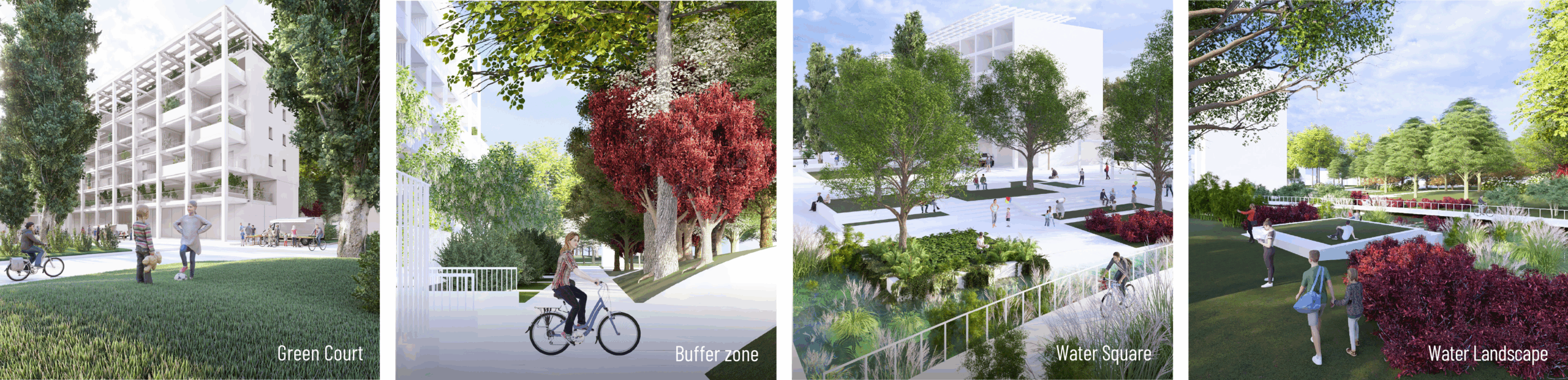
The urban proposal is based on the awareness that architecture alone is not sufficient to build a new urban identity: success lies in the quality and management of the project, in its ability to attract residents and define the neighborhood’s identity through “urban operators,” i.e., architectural elements that “serve a purpose for someone.” These operators vary in type. For example, public spaces are designed as accessible, sustainable areas that adapt to user needs: local markets, recreational zones, gathering spaces, etc., with a strong relationship between greenery, water, and permeability. Buildings seek identity through integration of housing, ecology, and cultural exchange.
Energy and environmental sustainability is pursued through landscape quality, soft mobility (a car-free district, walkable or bikeable within 15 minutes), energy self-sufficiency, water resource conservation, and innovative building solutions.
Constant attention to Universal Design completes the settlement concept: all urban spaces are functional and accessible to every user category (children, elderly, people with reduced mobility), organized to accommodate diverse needs and habits. Environmental quality extends to street-space renewal, with permeable pavements and green areas replacing r.v.w., creating a green axis that absorbs water, mitigates heat, and regulates the microclimate.
Mobility Concept
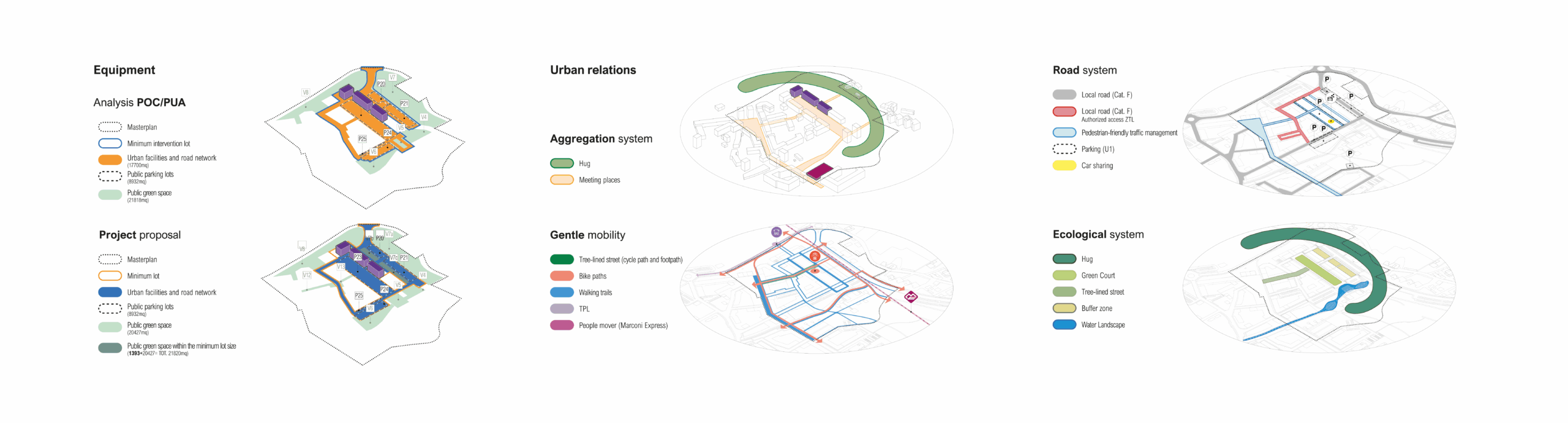
The masterplan optimizes mobility by placing vehicular circulation at the district’s perimeter and implementing a restricted traffic zone (ZTL) for residents and authorized users. At its core lies the main square with a local market, tree-lined areas, playgrounds, outdoor seating, and pocket parks. A tree-lined avenue connects it to a secondary square, forming a true social aggregation system.
Traffic is limited along the east–west axis, ensuring vehicular access to housing clusters while enabling pedestrianization of the north–south axis, which also hosts a cycle path.
Urban and Landscape Concept
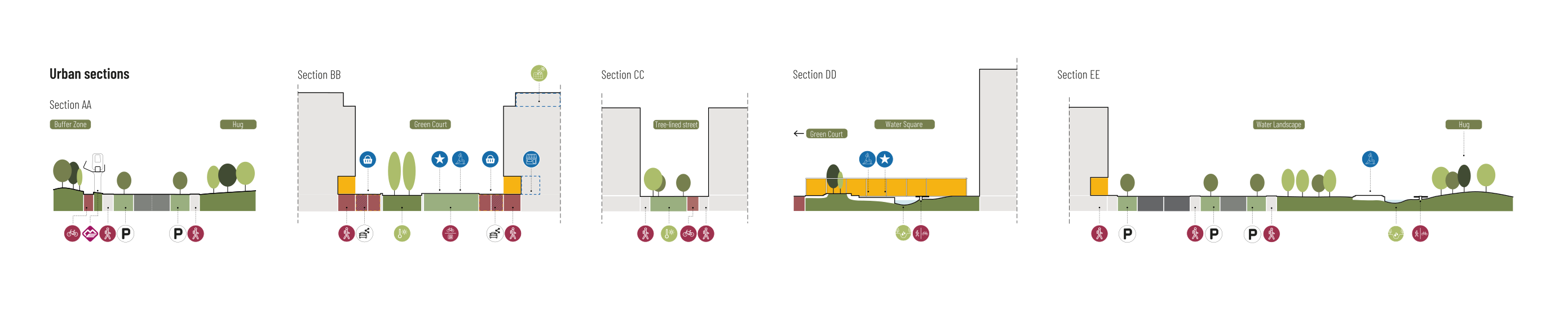
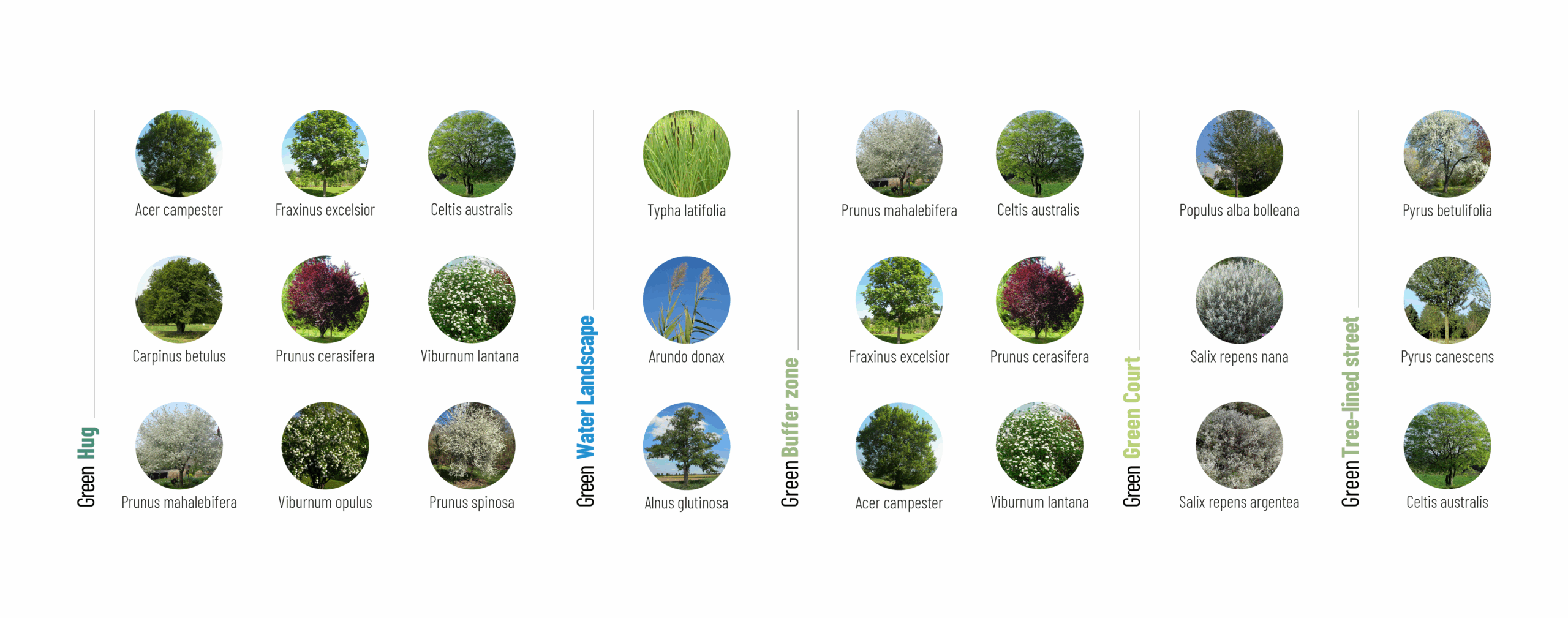
The landscape is conceived as an embracing form—created by reusing excavated soil and characterized by native vegetation, leisure spaces, and kiosks—culminating in a natural link to the Ghisiliera pathway, where vegetation creates sensory experiences with retention basins and bioswales.
A buffer zone to the north provides acoustic protection from the People Mover and forms an “urban forest.”
Urban Resilience and Energy Self-Sufficiency
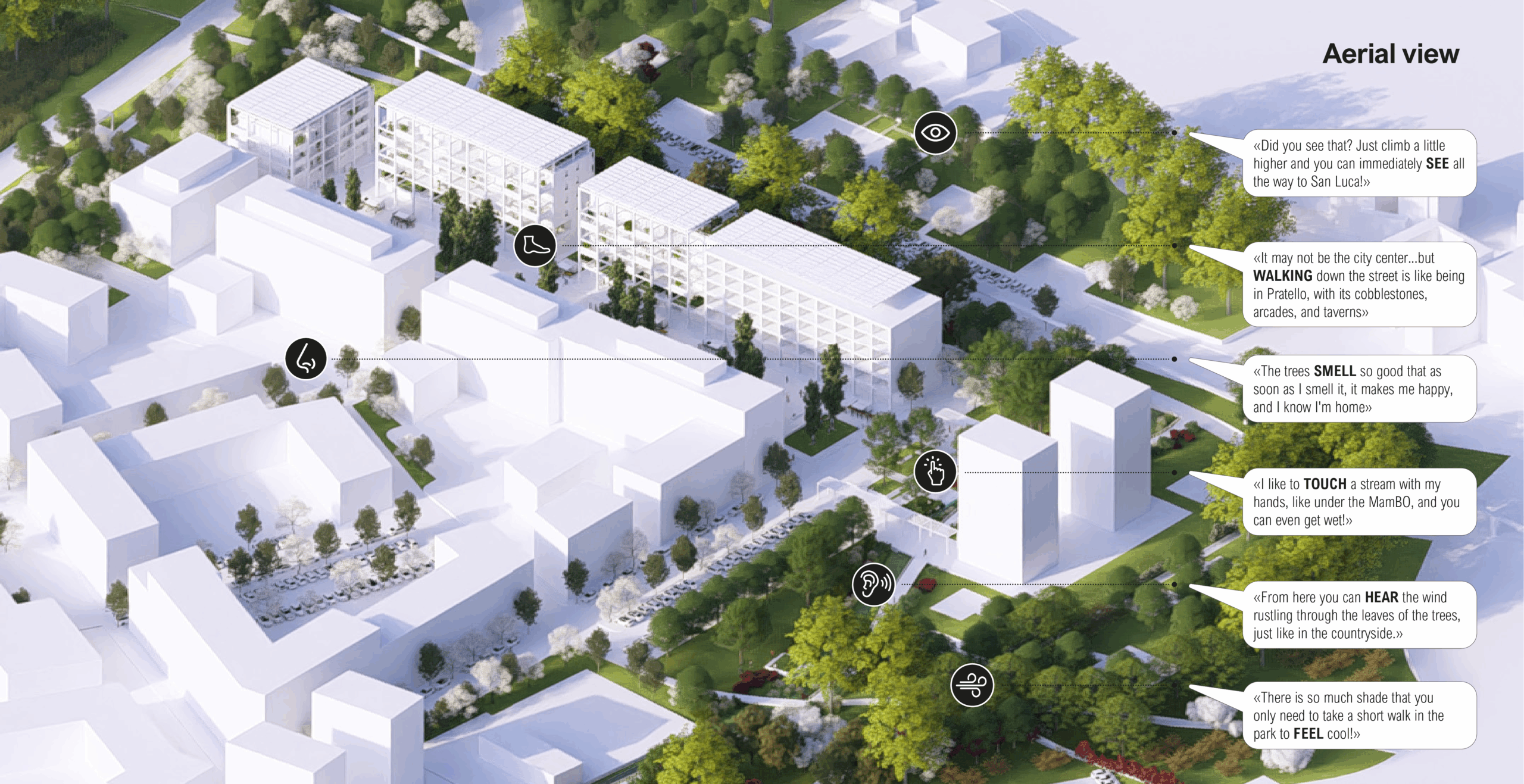
Urban resilience is assessed using Greenpass Check software, analyzing KPIs on climate, water, air, biodiversity, and energy. The project achieves a score of 65% (“Good”), outperforming the PUA’s 43% (“Poor”), demonstrating sustainable and adaptable urban growth. Energy self-sufficiency is pursued through readiness for Renewable Energy Communities, maximizing solar capture and groundwater use. Street lighting employs ultra-low-consumption LED systems with automated control. Infrastructure includes EV charging stations and modular plant systems, enabling phased construction.
Sustainable Urban Drainage
Stormwater management adopts SuDS (Sustainable Drainage Systems) techniques, ensuring hydrological invariance. Road permeability is increased, asphalt surfaces reduced in favor of infiltrating pavements, and retention basins, rain gardens, and bioswales introduced. Buildings feature tanks for water collection and recycling for domestic and irrigation purposes.
Architectural Concept and Sustainability
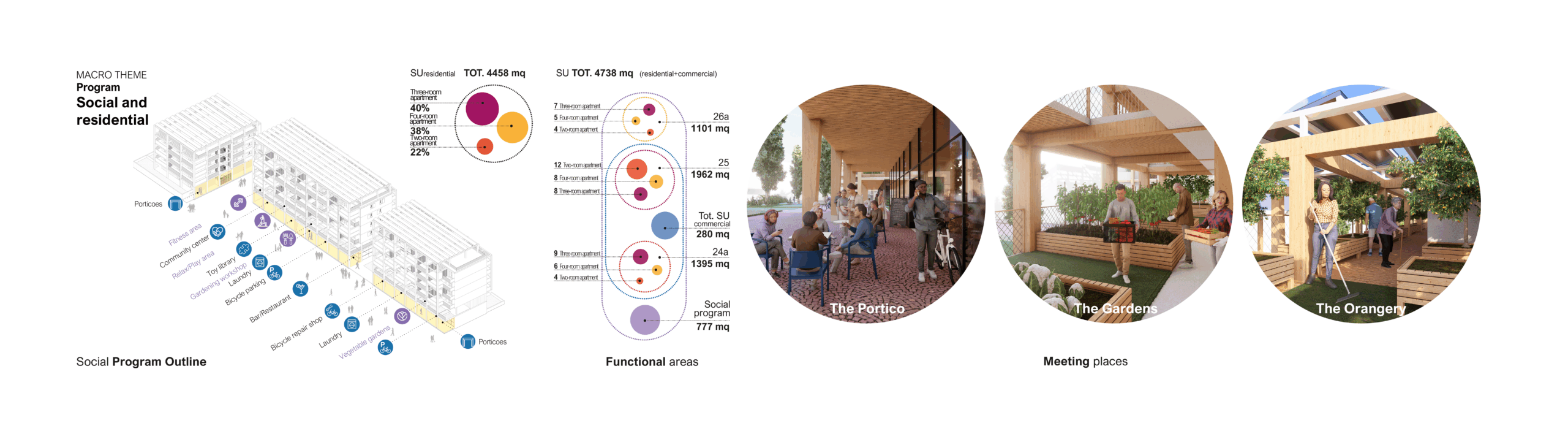
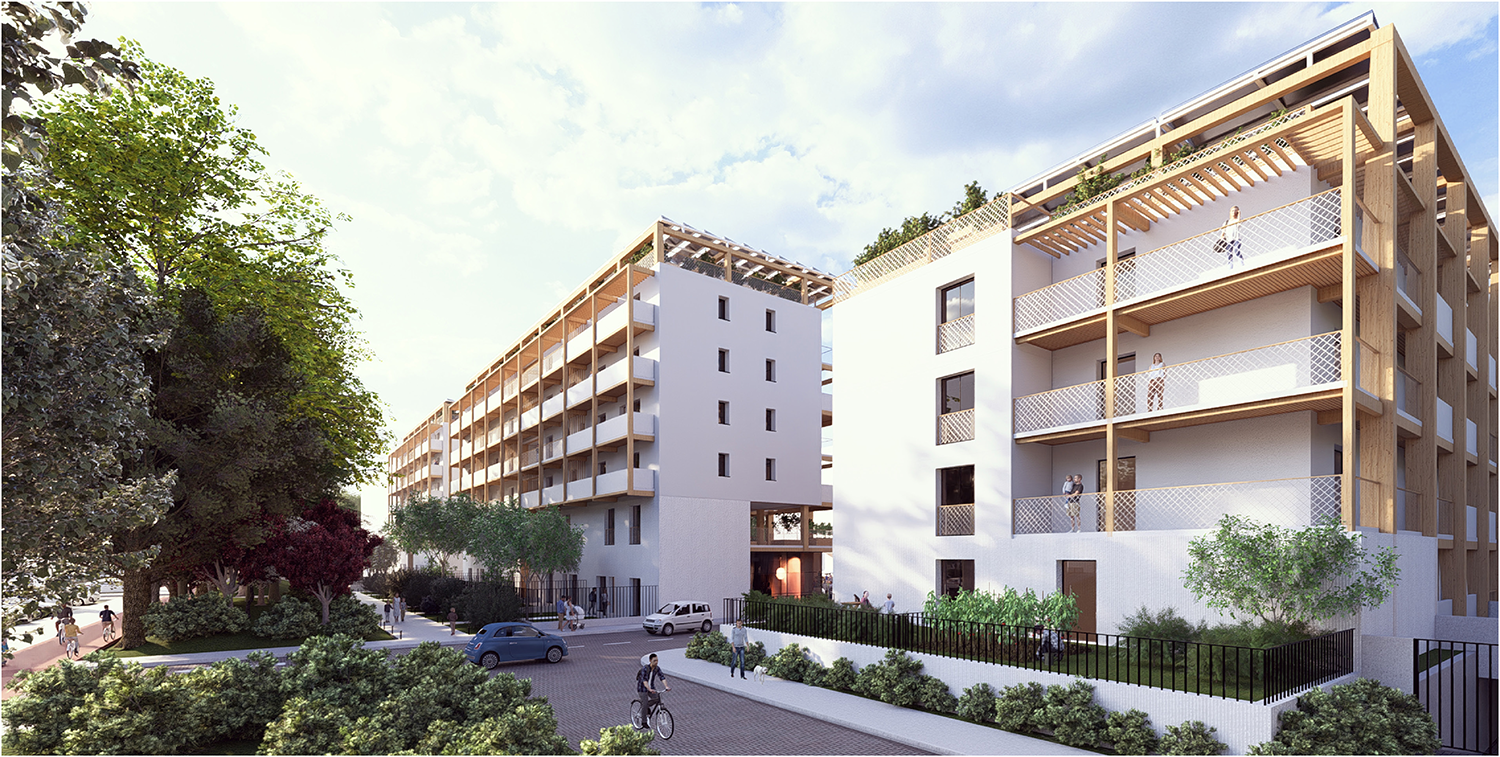
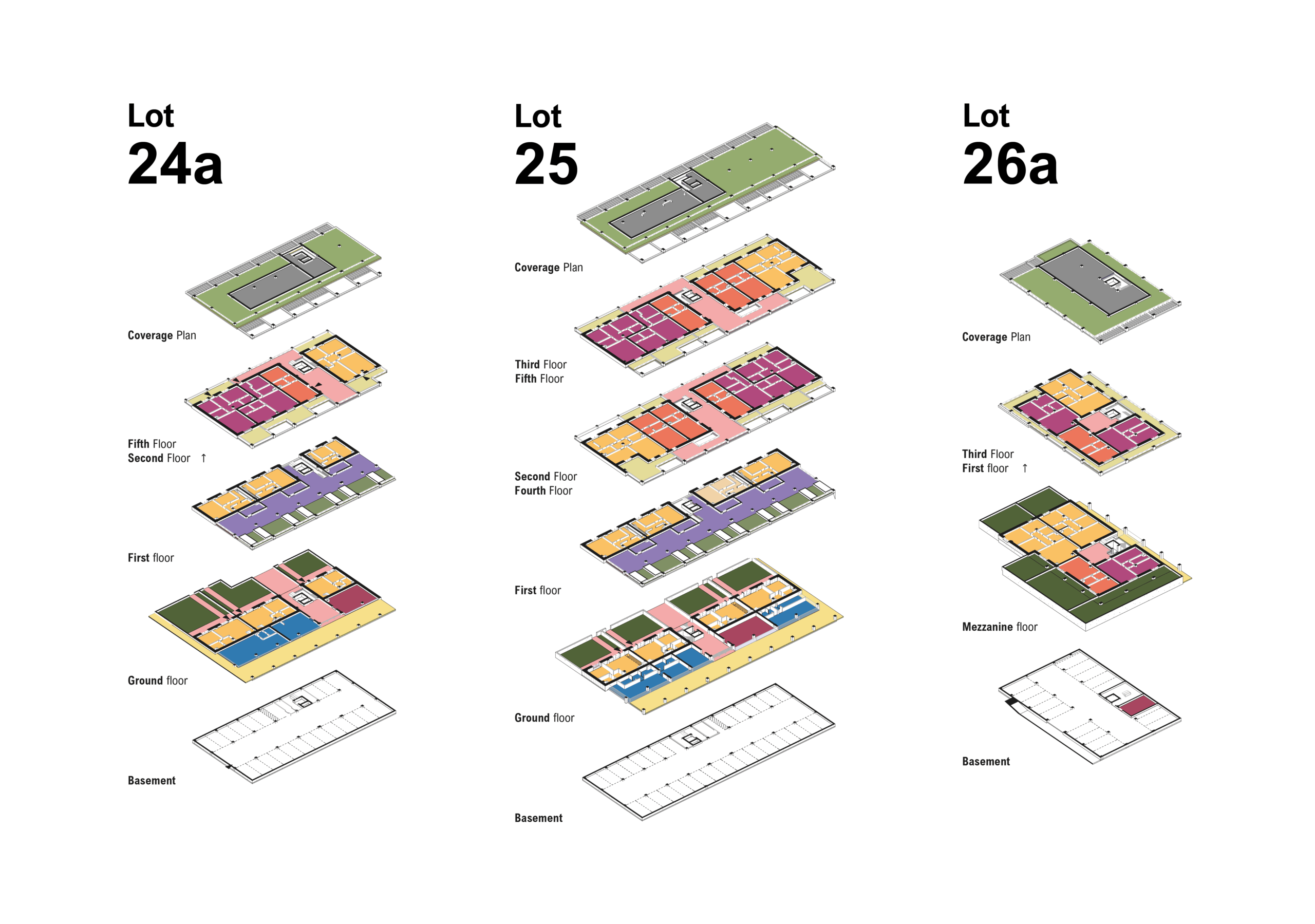
The architectural concept is based on a three-dimensional c.l.t. frame, creating a structural grid for shading elements and residential volumes. The frame supports photovoltaic systems and green roofs. Housing layouts are flexible, with shared “Z-shaped” access galleries emphasizing community character. All units are barrier-free, predominantly comprising one-, two-, and three-bedroom apartments.
Common spaces are flexible open areas, universally accessible, integrating activities for different age groups and social components. Urban farming, retail spaces, arcades, and outdoor seating foster social interaction and local microeconomy. Sustainability is assessed via Digital Twin and Positive Energy District (PED) methodology, achieving an 89% reduction in energy consumption compared to BAU buildings.

Technical Aspects, Monitoring, and Maintenance
The glulam timber structure is chosen for reliability, sustainability, and ease of prefabrication. Systems comply with Minimum Environmental Criteria, featuring efficient solutions and solar-powered domestic hot water production. LCA analysis evaluates environmental impact across the life cycle, with a carbon footprint of 4,568 tons CO₂ equivalent. Monitoring is managed through BEMS (Building Energy Management Systems), enabling progressive consumption reduction. Maintenance is simplified by straightforward technical choices and durable materials.
The ERS Bertalia–Lazzaretto project exemplifies an innovative, sustainable urban settlement focused on quality of life, integrating architecture, environment, energy, and community within an open, future-oriented vision.