Urban Regeneration Project for the Ravone Prati Area, Bologna
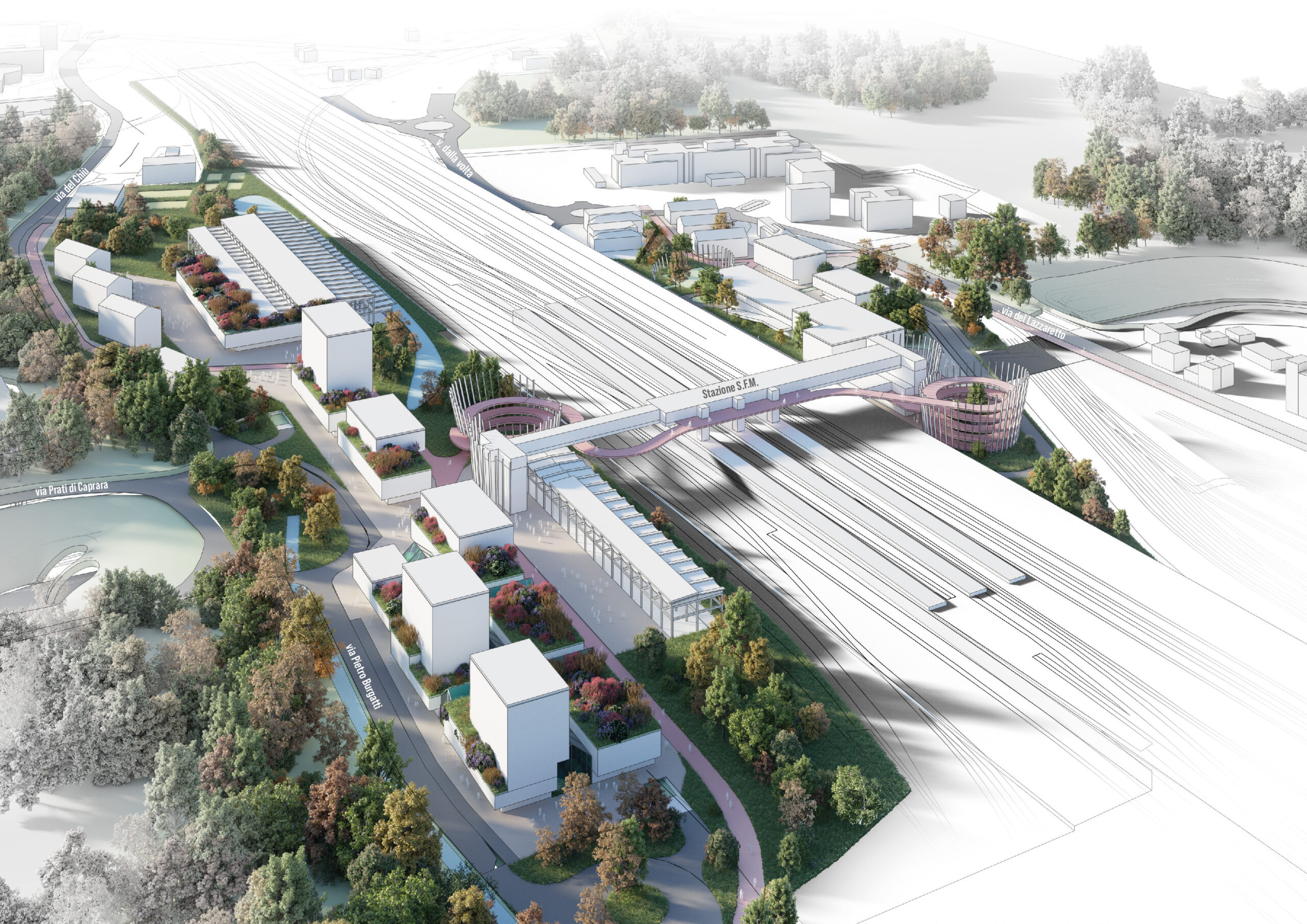

Globo
The project is part of the Reinventing Cities initiatives promoted by C40 – Cities Climate Leadership Group, the global network of mayors committed to tackling the climate crisis.
GLOBO stems from the balance between urban nature, architectural innovation, and sustainable technologies, placing the landscape at the heart of city life. Within the continuity between built environment and green spaces, the urban design fosters interaction with the community, creating cycle-pedestrian routes and connections to the urban fabric. It is integrated into a broader regeneration process involving approximately 500 hectares of disused areas.
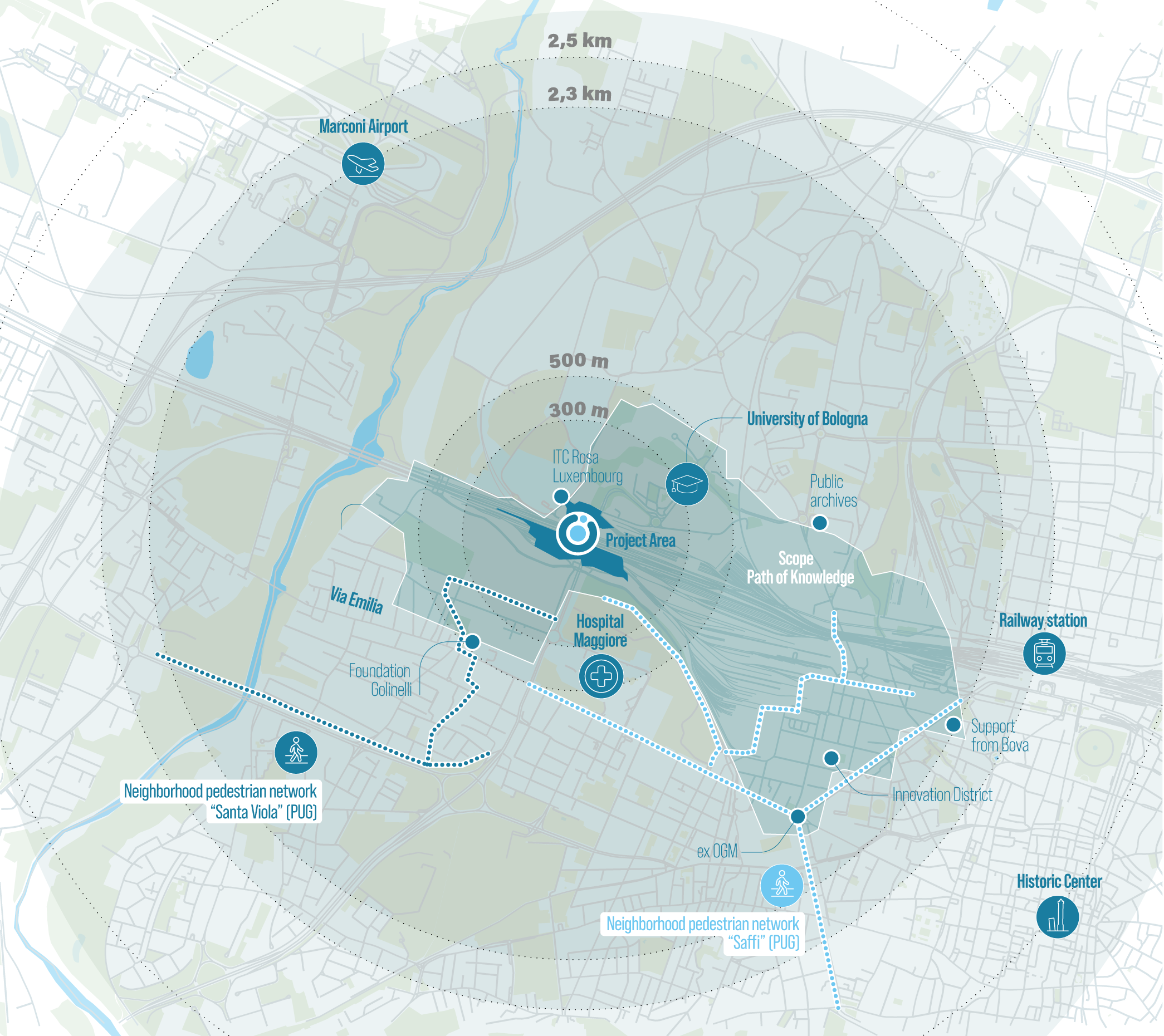
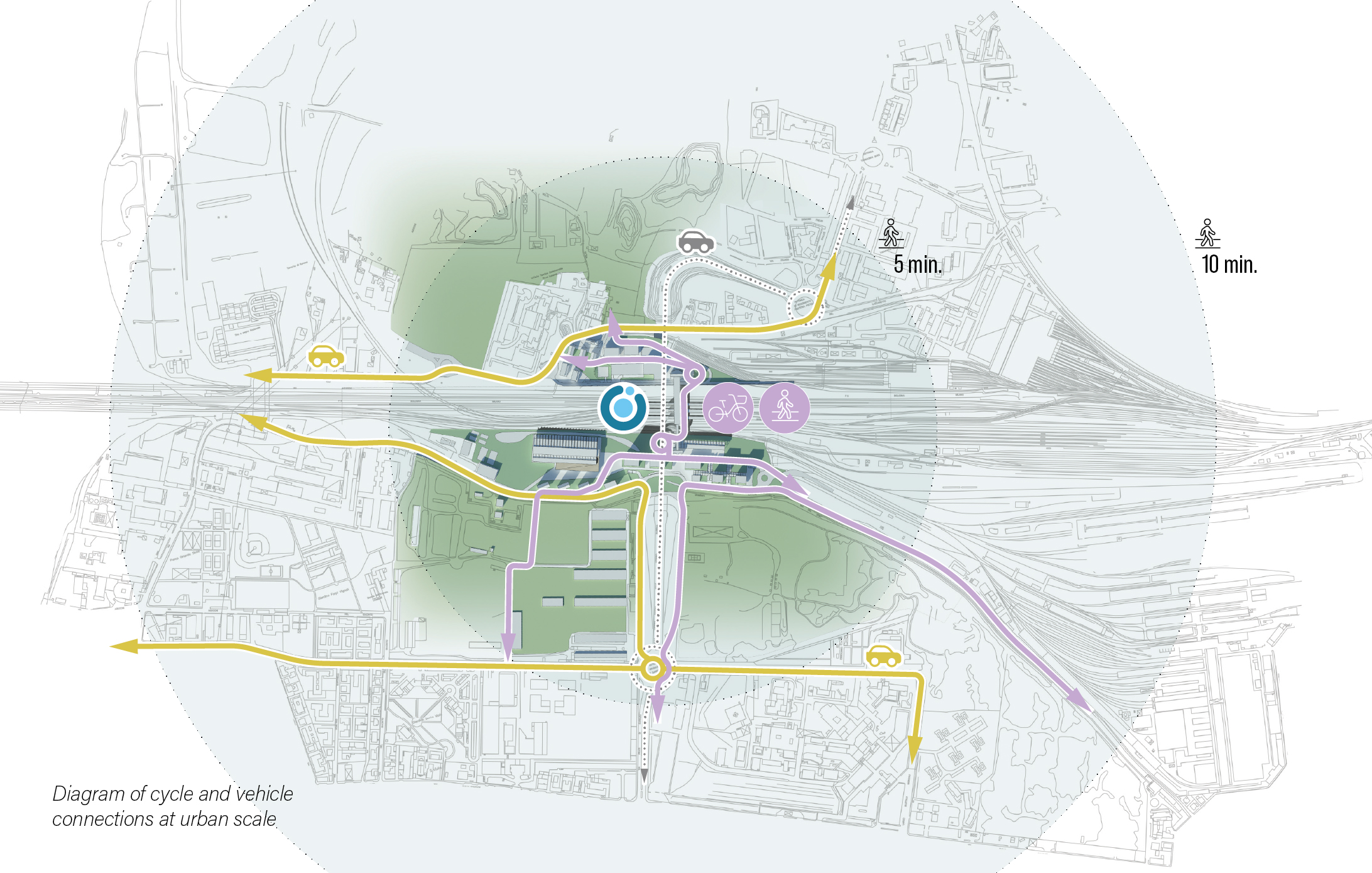
A key element of the project is the “Knowledge Path”, a relational spine and driver of innovation, research, and social interaction. The goal is to enhance Bologna’s attractiveness through knowledge, sociality, and inclusion, mitigating risks such as isolation and transience via two main attractors: startup incubators and neighborhood-scale commerce, aligned with the 15-minute city model.
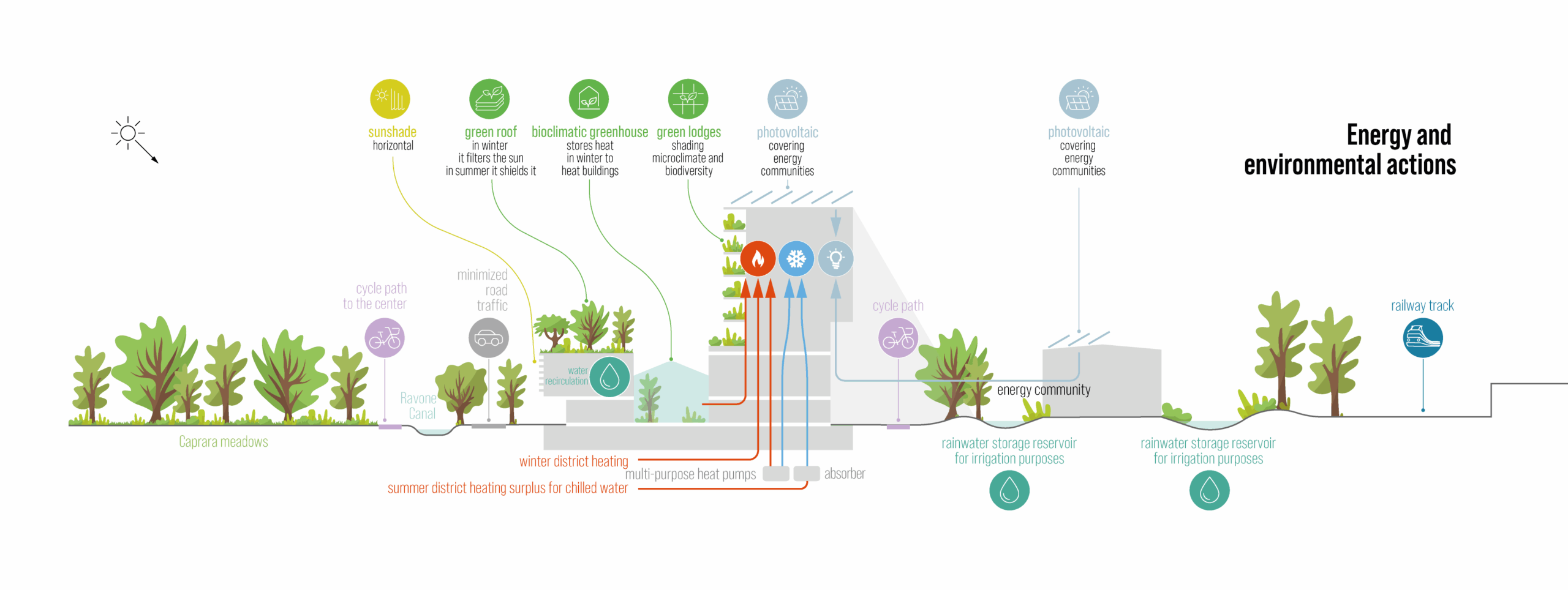
Sustainability is pursued through advanced energy and environmental design measures, linked to socio-economic interaction with the community, including energy redistribution systems such as Energy Communities (CER). From a settlement perspective, the intervention focuses on density to minimize land consumption and promote urban stitching, encouraging community-oriented living models.

Masterplan Strategies and Intended Uses
The project is articulated into targeted actions:
- Extension of the Prati di Caprara woodland beyond the railway, creating a large public park with diversified green areas to mitigate the heat island effect and integrate the existing ecosystem.
- Soft mobility as a connector between the southern and northern parts of the site, with cycle-pedestrian paths linking Ravone to the city center and Maggiore Hospital, reinforcing the “Knowledge Axis.”
- Reuse of existing structures, such as hangars and abandoned volumes, for city-scale attractive functions (events, incubators), following examples like Dumbo and Opifici Golinelli.
- Minimization of road infrastructure, with permeable public parking and underground private parking only where necessary.
- Densification along pedestrian spines: neighborhood retail and student housing in the north; incubators, residential (including social housing), commercial uses, and public services in the south.
- Implementation of an environmental, social, and economic sustainability agenda.

Stakeholder and Community Engagement
Regeneration is conceived as a participatory, multidimensional process, involving the community from the earliest stages. Planned activities include citizen science for biodiversity monitoring, educational programs, community gardens, collaboration agreements among residents, businesses, and institutions, as well as public meetings and temporary site activation to promote new uses.
The 10 Design Challenges and Solutions
GLOBO addresses the 10 challenges identified by Reinventing Cities for projects that are truly sustainable, resilient, and carbon-free:
- Energy and Energy Communities:
- Shared sources, IoT networks, elimination of combustion, heat pumps, renewable sources, and centralized platforms for resource optimization.
- Emission Reduction and Material Cycle:
- Focus on embodied carbon, reuse of structures and materials, recycled and local products, modular systems, and LCA analysis for carbon neutrality.
- Sustainable Mobility:
- Cycle-pedestrian routes, accessibility via public transport and future SFM, limitation of private traffic, bike parks, and widespread EV charging.
- Water Management and Resilience:
- Smart devices, underground tanks, permeable pavements, green roofs, rain gardens, floodable areas, and phytoremediation.
- Waste Management and Circular Economy:
- >85% separate collection, ecological islands, reuse centers, urban furniture in recycled PET, and construction waste management.
- Green Infrastructure and Biodiversity:
- Urban forest, parks, gardens, urban agriculture, native vegetation, biotopes, and biohabitat conservation.
- Inclusive Governance:
- Quadruple helix model involving public, private, academia, and community, with a scientific committee and synergies with hospitals, incubators, and creative industries.
- Sustainable Architecture:
- Building orientation for ventilation and solar control, bioclimatic greenhouses, green roofs, thermal and visual comfort.
- Reuse of Existing Buildings:
- Flexible, collective spaces without additional land consumption, enhancing historical-cultural heritage.
- Nature-Built Integration:
- Promoting virtuous cycles of well-being and sustainability in all aspects of daily life.
GLOBO represents an advanced model of urban regeneration based on sustainability, innovation, inclusion, and participation. Through the centrality of the urban forest, soft mobility, smart resource management, inclusive governance, and enhancement of existing heritage, the project aims to create a vibrant, resilient, and replicable district, capable of addressing contemporary challenges and projecting Bologna toward a sustainable and attractive future.