Former Pavia Military Arsenal
Restoration, Innovation and Sustainability
Design competition – Organised by the Lombardy Branch of the State Property Agency – for the urban regeneration of the state-owned property complex known as the former Pavia Arsenal. The proposal was developed in partnership with SOM, Dabster and Faccio Engineering.
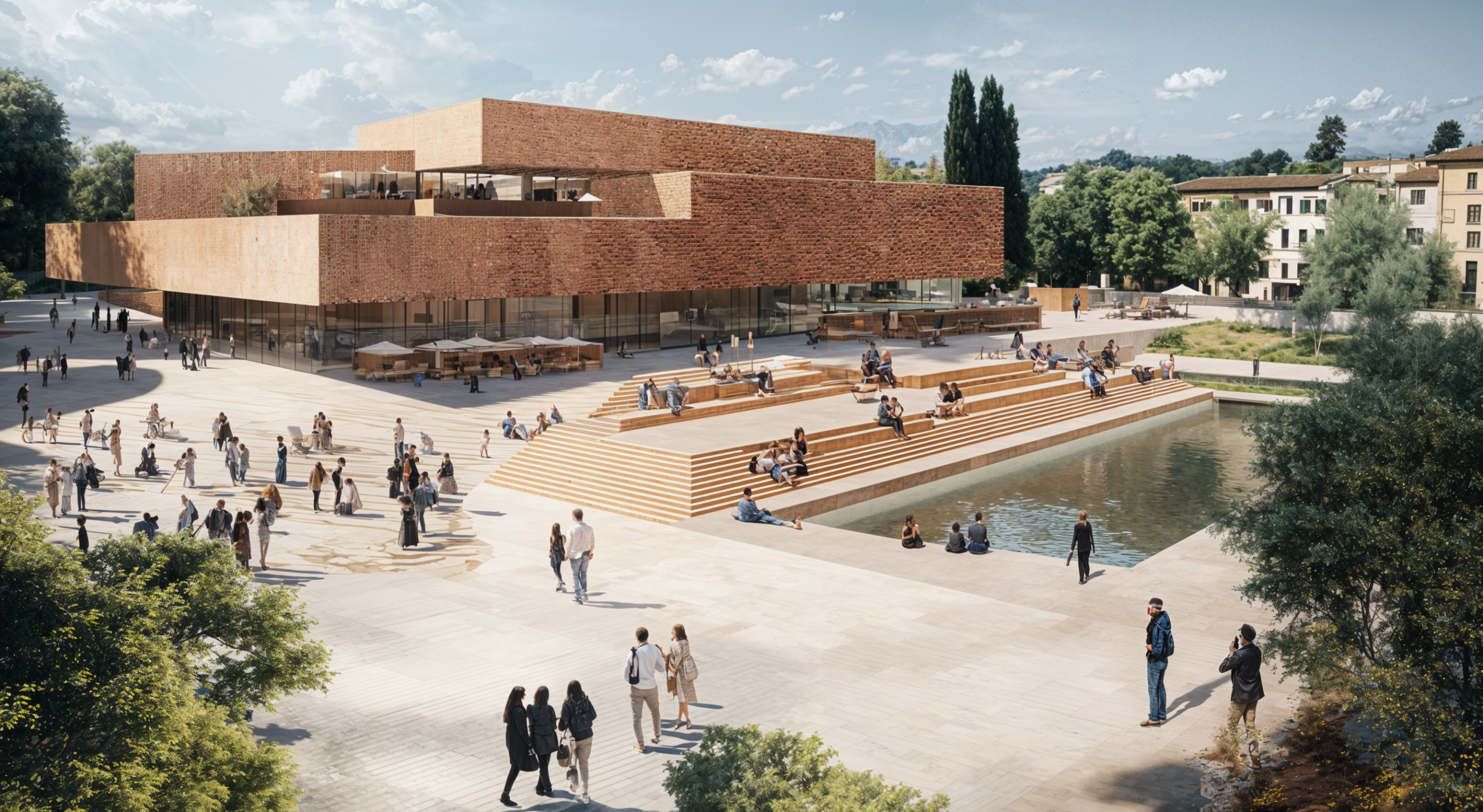
The project for the Former Military Arsenal of Pavia is conceived as a complex urban regeneration intervention, addressing the transformation of historic heritage through an integrated approach that combines restoration, innovation, and sustainability. The main objective is the development of a new State Administration hub capable of combining institutional value, architectural quality, and openness toward the city, while returning a largely underutilized site to the community.
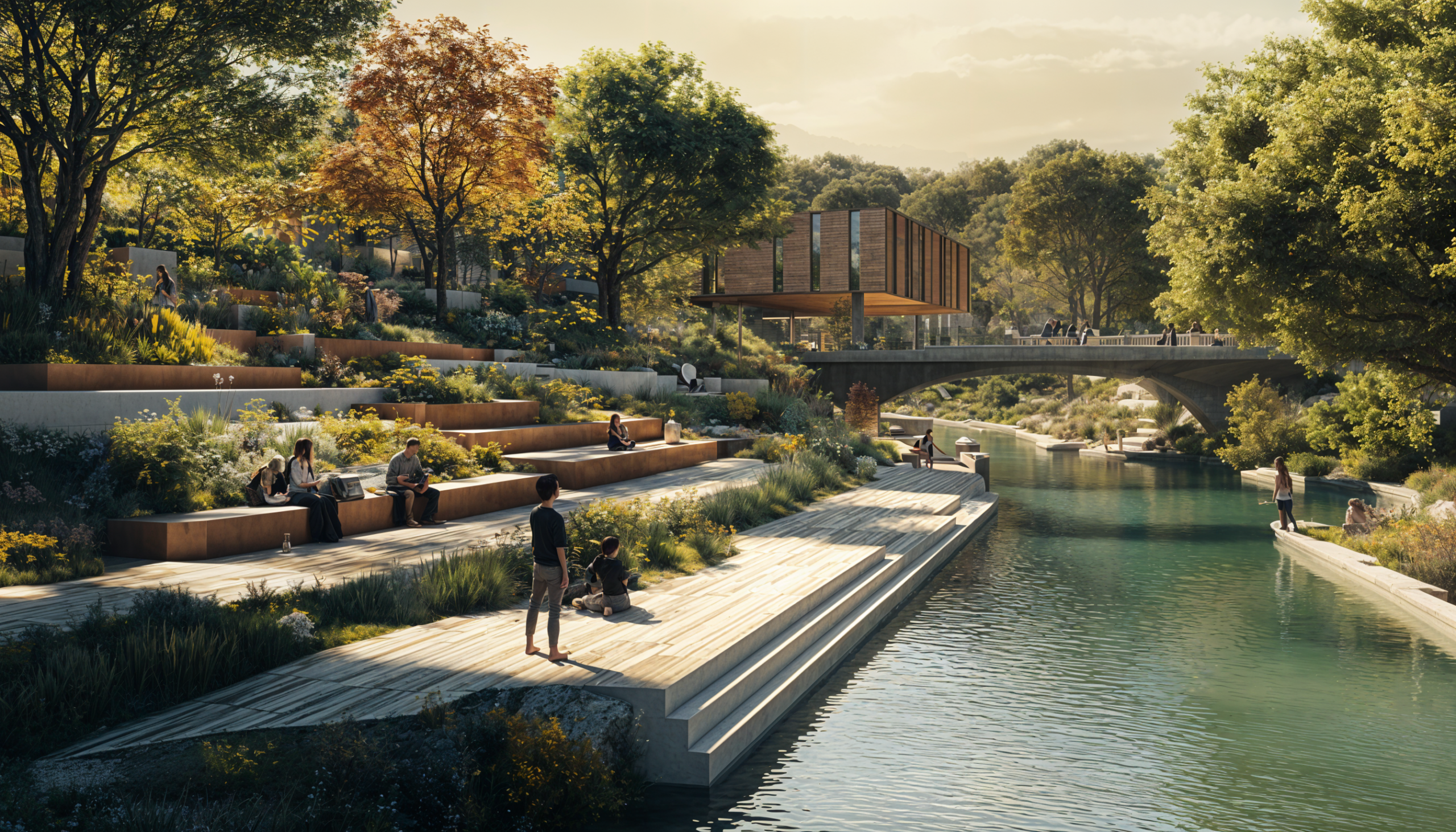
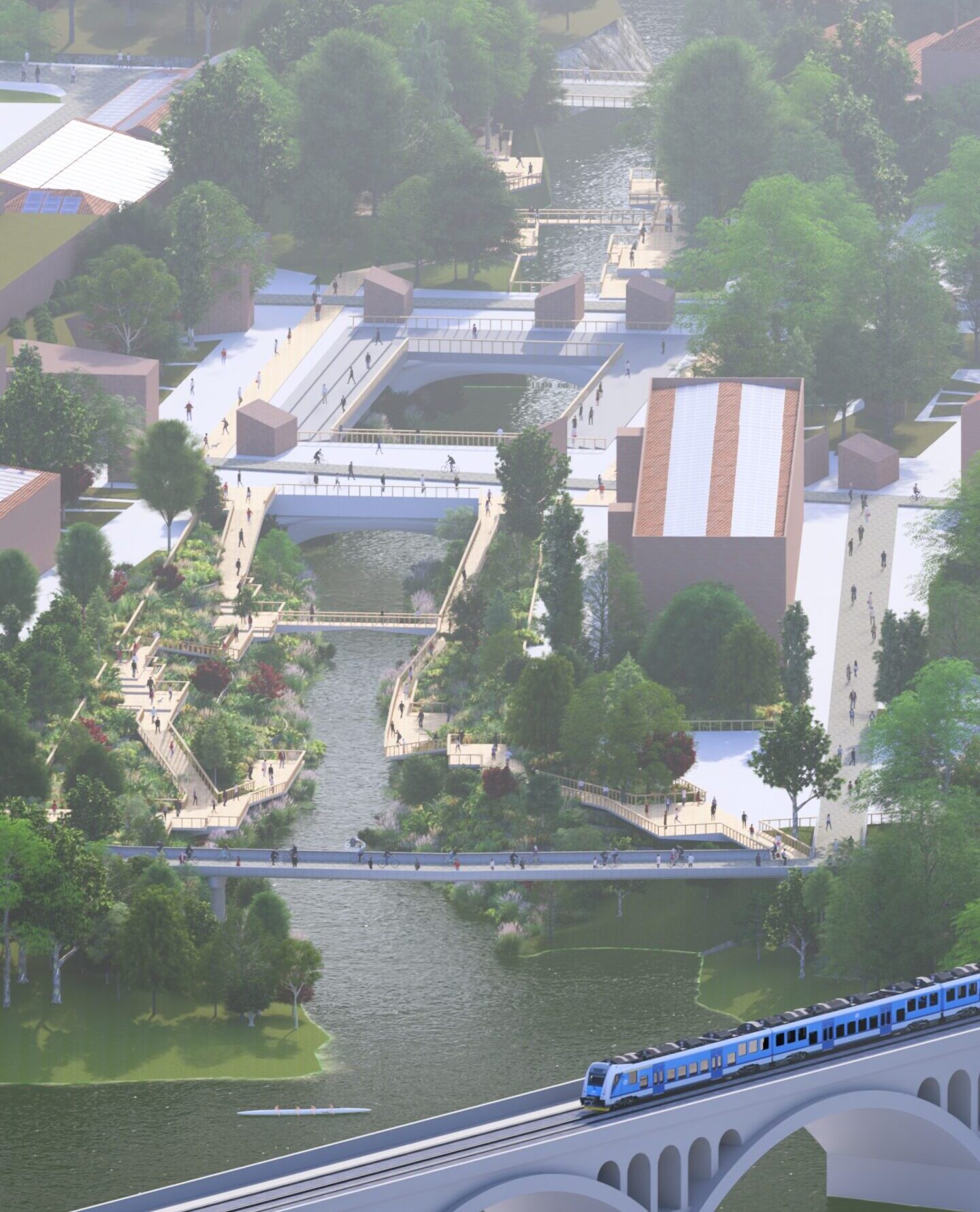
The project is inserted within a context characterized by a strong historical and morphological identity, derived from the original military layout, organized through rigid axes and hierarchical spatial systems. Alongside this structure lies an important natural system represented by the Navigliaccio canal and, more broadly, by the riverside ecosystem of the Ticino area. The proposal therefore acts as a mediating element between these two dimensions, establishing a dialogue between historical permanence and the natural landscape.
At the core of the proposal is an approach that interprets restoration not as simple preservation, but as a process of reactivating relationships between the different elements of the system.
The intervention aims to restore the unity of the complex, currently fragmented, and redefine the relationship between buildings, open spaces, and the surrounding environment through a strategy capable of integrating preservation and transformation.
The project addresses the complexity of the existing heritage through a methodology based on a strong historical-critical understanding and an in-depth analysis of the state of conservation.
This approach enables the definition of targeted intervention strategies focused on preserving original characteristics while reinterpreting them in a contemporary way and ensuring functional and performance upgrades of the buildings.
A key element of the proposal is the integration of sustainability principles within the regeneration process. The project includes the use of advanced analysis and design tools, such as Life Cycle Assessment (LCA) methodologies and environmental performance monitoring systems, with the aim of reducing the overall impact of the intervention and improving the long-term durability of the system.
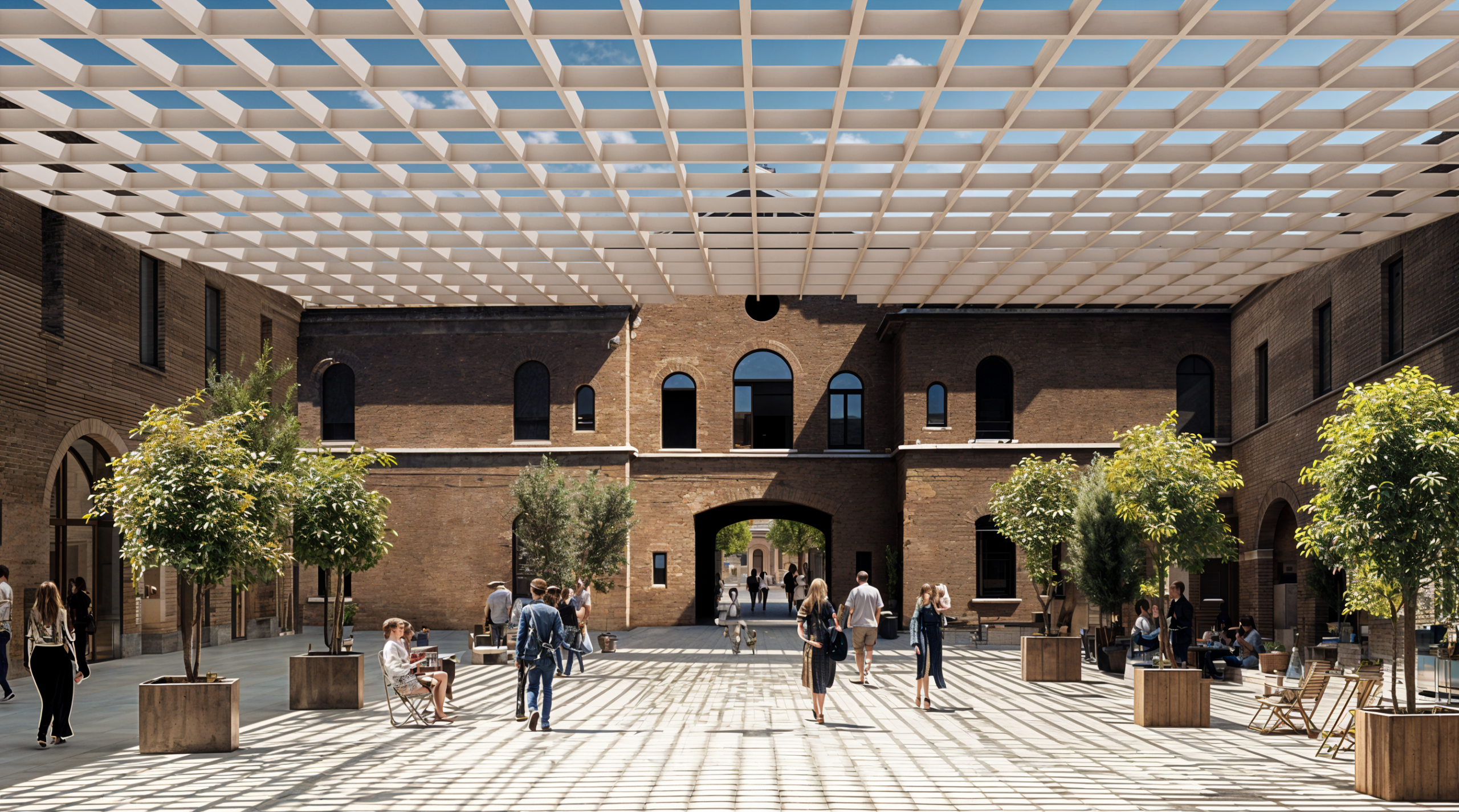
The design strategy is also based on introducing innovative elements within a protected historical context while maintaining a balance between preservation and contemporary expression.
Interventions are designed to be recognizable and compatible, avoiding mimetic solutions and ensuring the legibility of the different historical phases of the complex in accordance with the principles of contemporary restoration.
From a functional perspective, the project introduces a program capable of activating the site and integrating it into the urban system, transforming it into a new public focal point.
Administrative functions are complemented by spaces and services designed to encourage interaction with the local community, contributing to the creation of an inclusive and open environment.
The sustainability strategy also extends to resource and material management through approaches that prioritize the reuse of existing structures and the implementation of innovative construction solutions. This approach reduces resource consumption while enhancing the value of the existing heritage, contributing to the development of a responsible and circular intervention model.
Furthermore, the project is characterized by a strong integration between technical design and operational management through the use of advanced design tools and multidisciplinary coordination systems. The implementation of digital models and monitoring platforms allows project performance to be managed throughout the entire life cycle, ensuring quality, efficiency, and adaptability over time.
The intervention for the Former Military Arsenal of Pavia proposes a model of urban regeneration based on the balance between historical memory, innovation, and sustainability. The project transforms an existing heritage site into a new public infrastructure capable of generating urban, environmental, and social value, contributing to the creation of a more resilient and contemporary city.