Arenella Former Chemical Plant, Palermo
When a Program comes Together
Design competition promoted by C40 – Reinventing Cities. The proposed project was selected as a finalist in the competition.
The project “PST – when a Program comes Together” is based on the idea that urban regeneration does not stem from form, but from program. The title itself introduces a vision in which urban quality arises from the convergence of functions, uses, and stakeholders, capable of activating complex and long-lasting dynamics. The intervention on the Ex Chimica Arenella site in Palermo is therefore conceived as a device in which the program becomes the primary infrastructure of the project, capable of generating urban, social, and economic value.
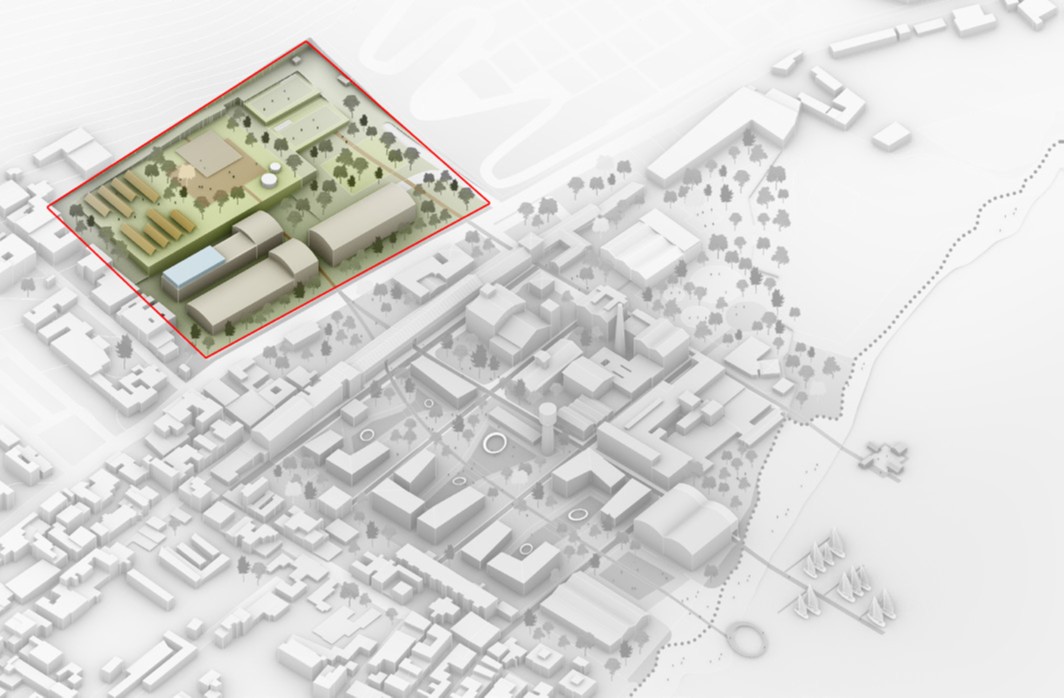
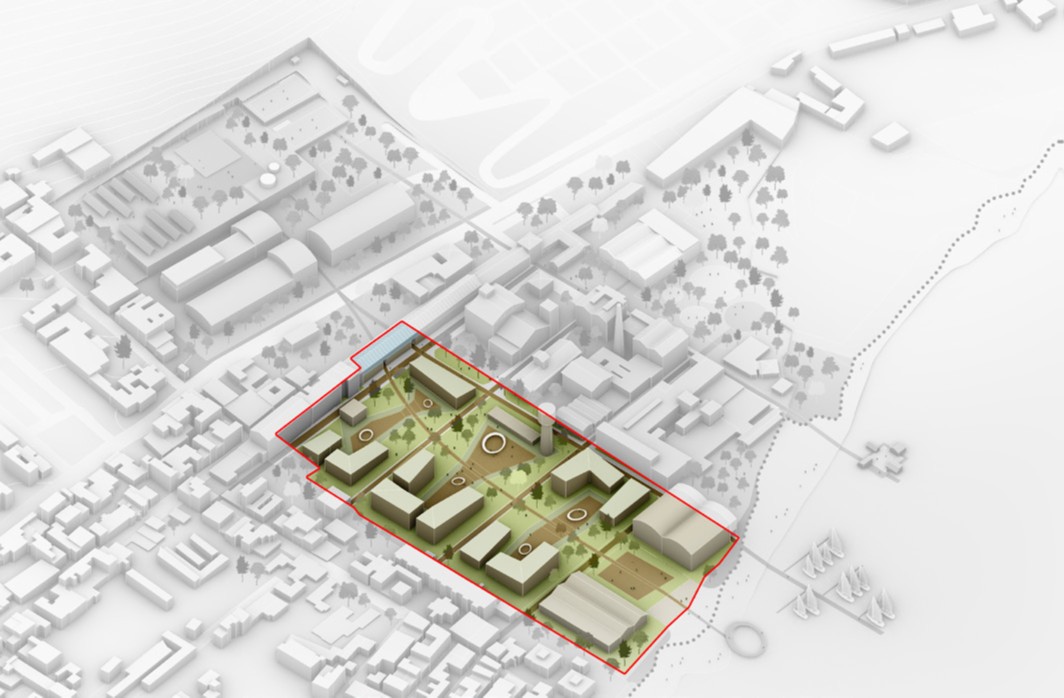
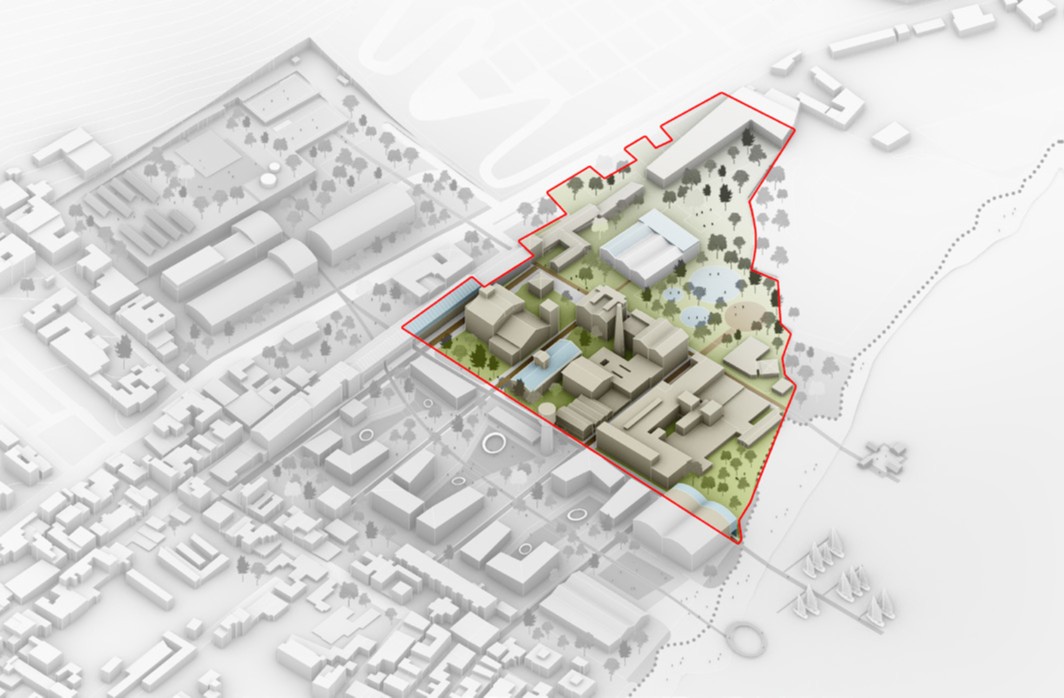
The site, characterized by a large industrial archaeology complex currently in a state of abandonment, represents a strategic opportunity for urban transformation. As part of the international C40 Reinventing Cities competition, the project responds to a framework that evaluates not only environmental performance but also the capacity to develop sustainable and integrated development models. Within this context, the proposal positions itself as one of the finalist solutions, offering a vision capable of combining reuse, innovation, and urban attractiveness.
The design approach goes beyond a single-function logic, instead developing a complex and hybrid system that integrates residential, tourism, commercial, and public service components. The program includes diverse elements such as student housing and senior housing, a resort integrated into the existing industrial heritage, education and cultural spaces, retail areas, and sports facilities, configuring an urban system capable of functioning as a new territorial centrality. This functional articulation is complemented by a strong focus on public space and landscape, which act as the connective structure of the project.
The open-space system—composed of a large waterfront square, an urban park, and a greenway—establishes continuity between city and sea, helping to repair the relationship between urban fabric and coastline while improving the quality of the urban experience.
The project develops through a logic of integration between urban infrastructure and sustainable mobility, promoting an accessible and connected city model. Strategies include the strengthening of public transport, the introduction of soft mobility systems, and last-mile solutions, contributing to the creation of an urban structure aligned with the principles of the 15-minute city.
A central element of the proposal is the environmental infrastructure, conceived as an integrated resource management system. Through nature-based solutions, sustainable urban drainage systems, rainwater harvesting and reuse, and renewable energy production, the project establishes a resilience-oriented model aimed at reducing carbon footprint, in line with ESG criteria and the objectives of the C40 program.
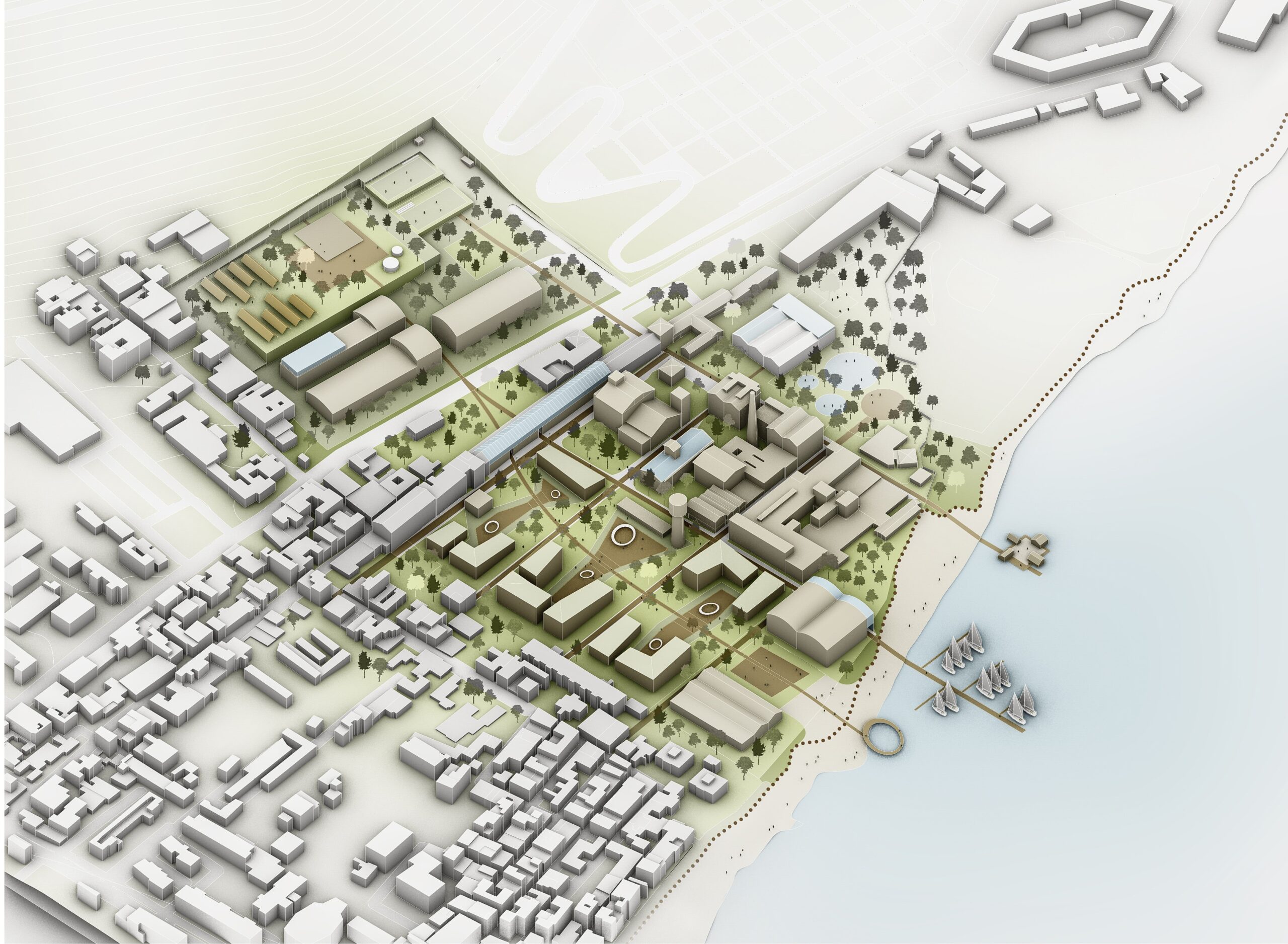
The transformation of the site is also guided by constraints and opportunities linked to the presence of existing industrial heritage, which is partially preserved and reinterpreted. Maintaining the original volumes and key characteristics of the built fabric allows the memory of the place to be retained, while integrating it with new functions and contemporary architectural languages, balancing conservation and innovation.
From an operational standpoint, the project is structured as a phased and articulated process involving multiple stakeholders, including investors, designers, and institutional actors. The proposal is embedded in a complex decision-making framework in which the economic offer and the urban project are closely integrated, and feasibility is ensured through financial planning tools and phased development strategies.
The economic dimension is addressed through a scalable investment model organized into plots and phases, enabling the progressive activation of the project’s components. This strategy allows timing and development modalities to adapt to market conditions and operational dynamics while
“PST – when a Program comes Together” proposes an urban regeneration model based on the integration of functions, environmental systems, and economic strategies.
The project operates as an evolving platform in which the program becomes a generative tool capable of activating complex urban processes and transforming a marginal area into a new sustainable, inclusive, and attractive centrality.