Forte Sant’Andrea, Venice
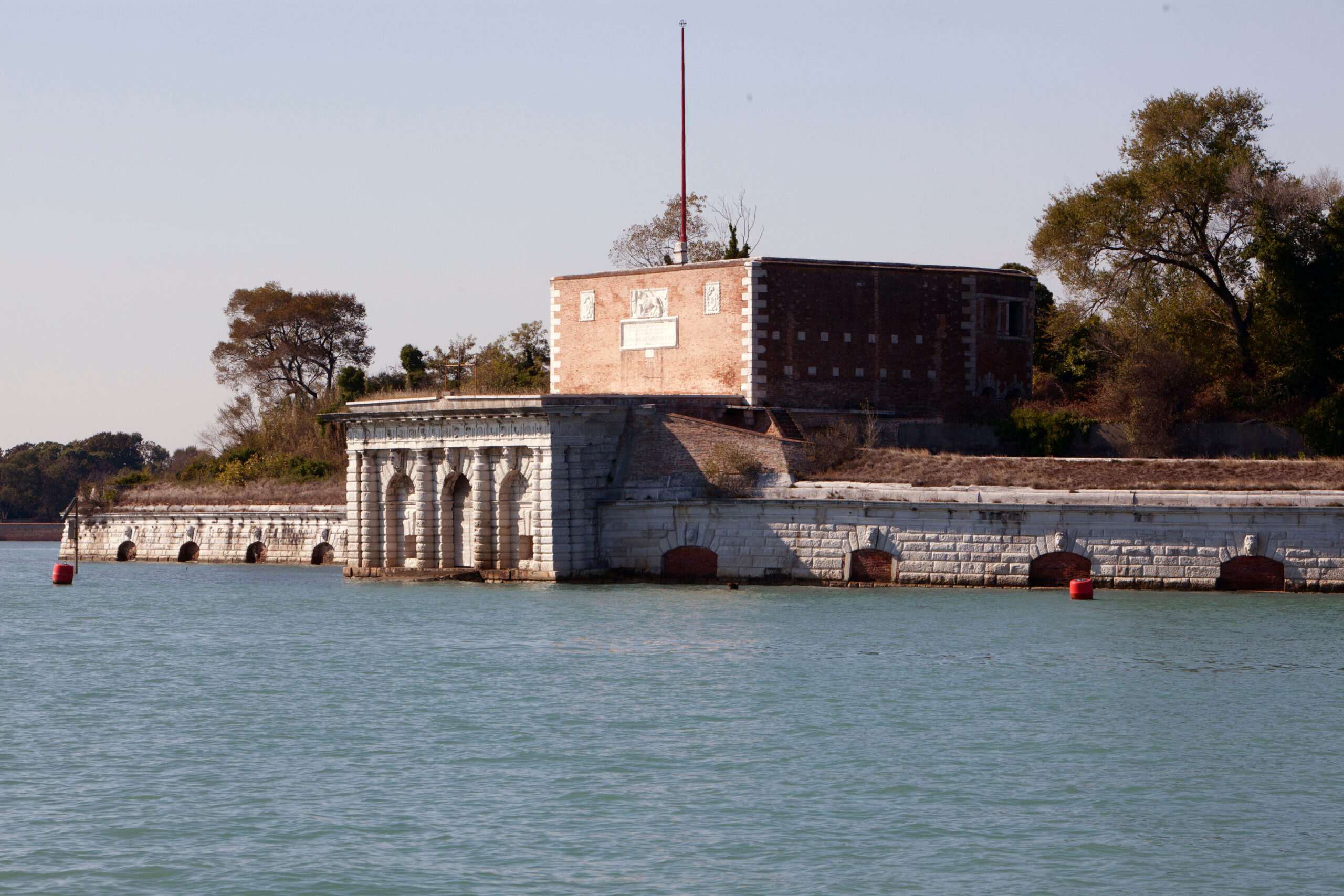
Antifragile
Design competition launched by C40 – Reinventing Cities. The proposed project was selected as one of the competition finalists.
The project interprets Forte Sant’Andrea as an opportunity for regeneration capable of transforming fragility into a resource. As part of the C40 Reinventing Cities program, the intervention aims to recover a site that is currently vulnerable to the effects of climate change, turning it into an adaptive structure capable of evolving over time.
The proposal adopts an integrated approach that enhances the relationship between architecture, landscape, and water, key elements of Venetian identity. The concept is based on a flexible and long-lasting structure designed to accommodate cultural, educational, and social functions while promoting more sustainable forms of tourism. Architecture thus becomes an open and adaptable infrastructure capable of supporting different uses and responding to future territorial needs.
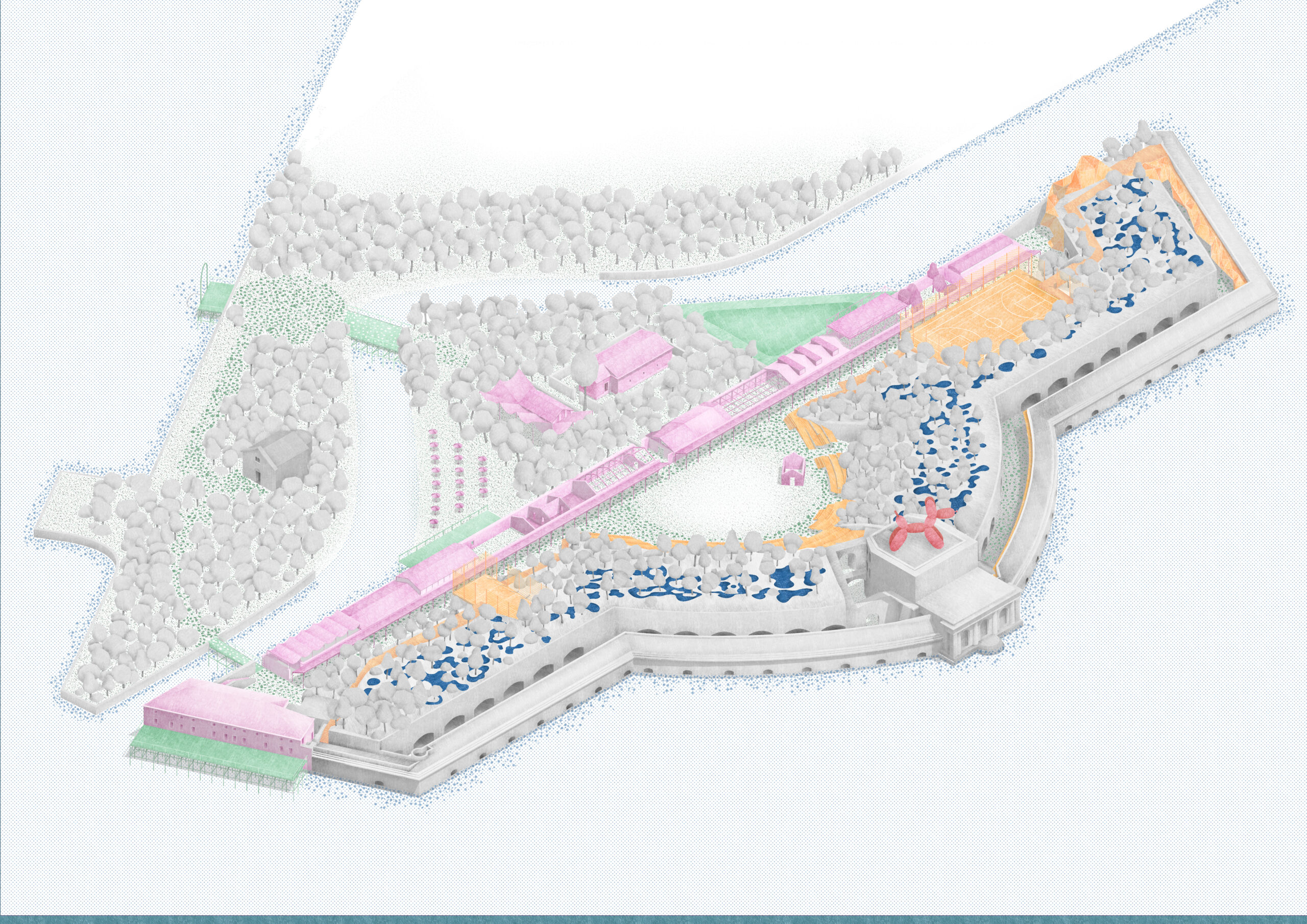
Masterplan, Mobility, and Public Space
The project proposes an articulated system of functions and spaces capable of activating the site at both local and international scales. Sports, cultural, and performative activities form the programmatic core of the intervention, contributing to a positive socio-economic impact and transforming the fort into a new attraction hub for citizens, students, tourists, and creative communities.
Green infrastructure plays a central role in the design strategy. It is conceived as a “common good” that simultaneously contributes to the recovery and safeguarding of the existing heritage while creating new sustainability systems. Through integrated solutions such as solar energy capture, stormwater management, phytoremediation systems, and sustainable urban drainage systems, the project establishes a resilient framework aligned with a net-zero vision.
Particular attention is given to the relationship between water and architecture, which becomes a generative element of the project. Alternative scenarios, such as the “Blue Project,” reinterpret existing spaces through the introduction of water systems and integrated swimming pools, transforming historical structures into experiential devices and strengthening the relationship between heritage, landscape, and contemporary use.
Site accessibility is developed through an integrated sustainable mobility system that combines public transportation with “last-mile” solutions based on soft mobility and innovative systems, ensuring efficient connections with the center of Venice and neighboring islands. This approach contributes to reducing environmental impact while improving the user experience.
From an operational and economic perspective, the project is conceived as a flexible and scalable system organized through successive phases of development.
The primary infrastructure enables the progressive activation of different plots and functions, adapting to investor needs and market dynamics while ensuring coherence with the overall vision.
The functional program combines public spaces with complementary activities, including event areas, exhibition spaces, sports facilities, hospitality functions, and support services. This structure encourages diverse and continuous use of the site, broadening its user base and contributing to the economic sustainability of the intervention.
Antifragile proposes a model of urban regeneration that goes beyond the logic of simple preservation or resistance, moving toward an evolutionary and adaptive approach. Through the integration of environmental sustainability, innovation, and social activation, the project defines a paradigm in which historical heritage becomes a dynamic platform for new forms of use, interaction, and contemporary development.